1. Separate the rolling route, material grade and surface condition
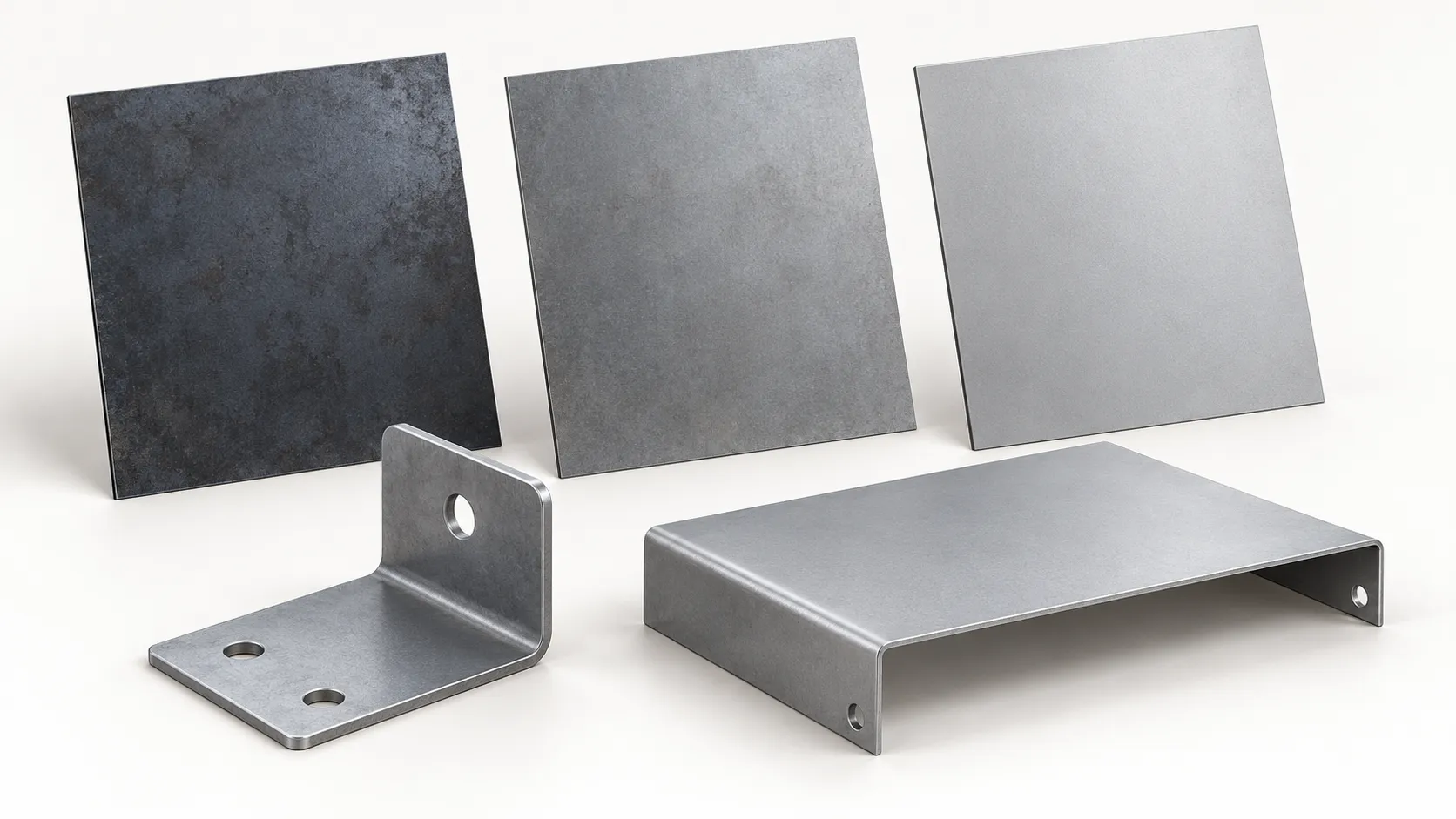
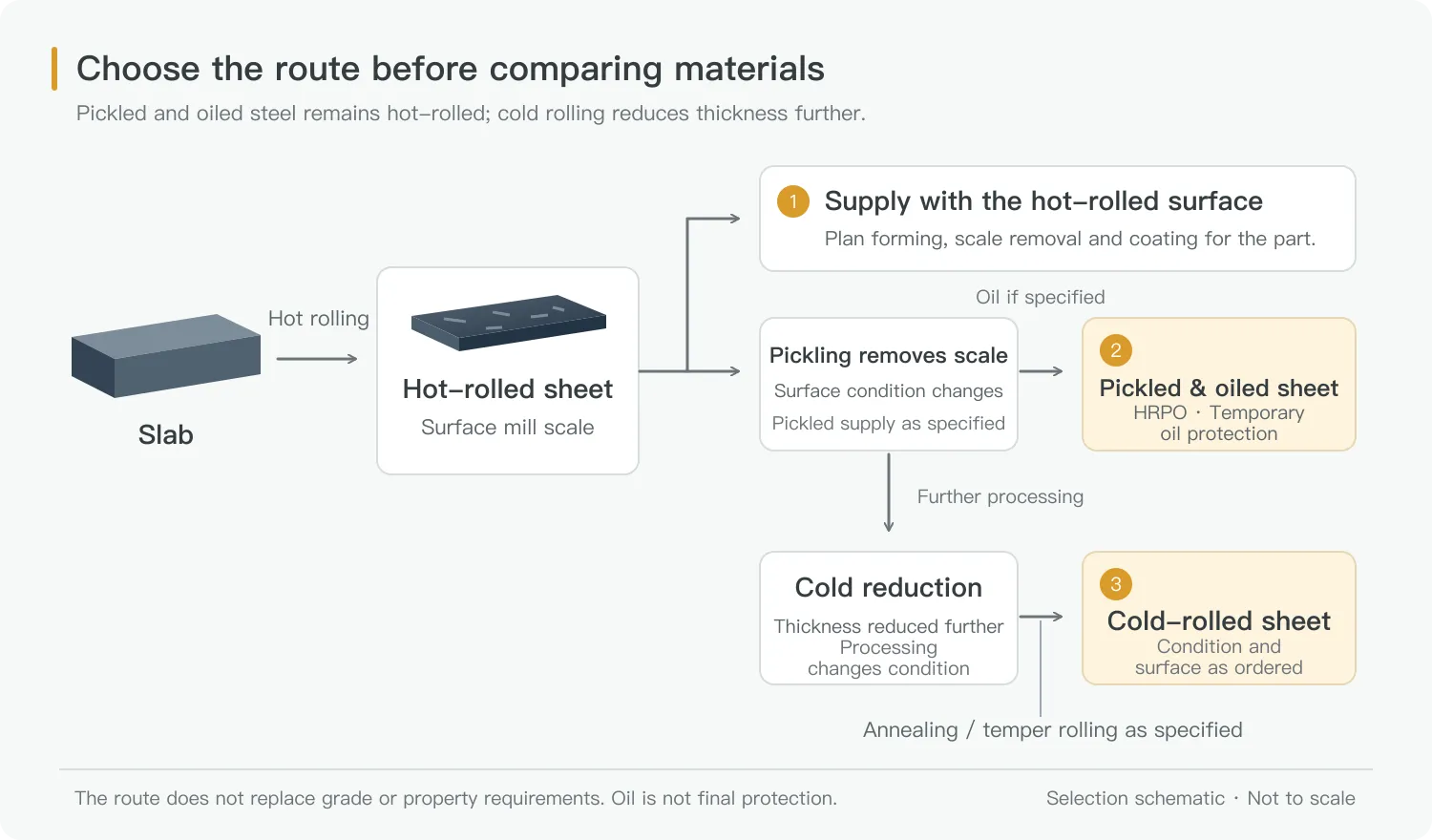
Hot-rolled sheet is produced through a hot-rolling route. A hot-rolled surface that has not been descaled commonly retains mill scale; the purchasing term black sheet often refers to this surface condition. Hot-rolled material can also undergo pickling or other processing, so hot rolled does not describe just one appearance.
Pickled sheet here means hot-rolled steel sheet whose mill scale has been removed by pickling. It remains hot-rolled material. If rust-preventive oil is then applied, it is commonly called hot-rolled pickled and oiled steel, or HRPO. Pickling and oiling are separate conditions to confirm when ordering. The oil film mainly provides temporary protection during storage and transport; it does not replace the finished part's corrosion protection. See the hot-rolled sheet process description in [1].
Cold-rolled sheet usually starts with hot-rolled material that has been descaled, followed by cold reduction. Subsequent annealing, temper rolling or other specified supplied conditions affect formability. Full-hard cold-rolled material and annealed cold-rolled sheet for forming must not be treated as the same input. Cold rolled does not automatically mean soft or easy to bend. [2]
Keep three items separate in a purchase specification: the grade and standard identify the required material; the supplied condition defines its delivery state; and the surface requirements define the acceptable surface. SPHC, SPCC and Q235 are grade designations. Pickling and oiling are not a parallel set of grades. Any proposed substitution needs a further review of the actual requirements.
2. Compare the three candidates on the same basis
The comparison below supports initial material selection for ordinary carbon-steel brackets and panels. It does not replace the grade standard or finished-part drawing. Items requiring confirmation should be translated into purchasing specifications, process requirements and sample checks.
| Comparison | Hot-rolled sheet with an as-rolled surface | Hot-rolled pickled / pickled and oiled sheet | Cold-rolled sheet |
|---|---|---|---|
| Material and surface | Hot-rolled route; the surface may retain mill scale | Scale removed after hot rolling; confirm oiling separately | Cold-rolled; confirm annealing, temper and surface classification separately |
| Selection starting point | Parts with less demanding surface appearance and a defined finishing route | Parts requiring a surface free of hot-rolled scale, without necessarily needing a cold-rolled condition | Visible panels, thin-sheet forming or parts with specific surface and dimensional requirements |
| Bending and stamping | Check the grade, condition, thickness and actual forming requirements | Pickling alone does not establish the drawability the part requires | Distinguish commercial quality, drawing quality and hardness condition; cold rolled alone is incomplete |
| Dimensions and flatness | Specify purchased thickness tolerance, sheet shape and finished-part requirements | Removing scale does not establish compliance with a flatness requirement | Confirm against the standard and purchase conditions; the cold-rolled label does not guarantee assembly accuracy |
| Preparation for coating | Select cleaning around scale, rust and oil contamination | Confirm removal of rust-preventive oil and processing lubricants, together with subsequent treatment | Cleaning and suitable pretreatment are still needed; a smooth surface is not automatically ready for coating |
| Storage, handling and final protection | Control rust and contamination; select finished protection for the environment | A thin oil film is temporary protection, not the finished corrosion-protection system | Control rust, scratches and handling damage; final protection still needs a separate specification |
| Sample checks | Forming, the cleaned surface, coating and assembly | Forming, cleaning effectiveness, coating and assembly | Visible faces, forming marks, flatness, coating and assembly |
| Scope of price comparison | Material plus cleaning, forming, finishing and inspection | Material plus degreasing, forming, finishing and inspection | Material plus cleaning/degreasing, forming, cosmetic protection, finishing and inspection |
Surface and edge conditions can also be specified separately. For example, mills distinguish non-pickled, pickled, pickled and oiled, and trimmed-edge supply conditions. Put the requirements in the order rather than inferring them from the material name. [3]
3. Look at different features on an internal bracket and a visible panel
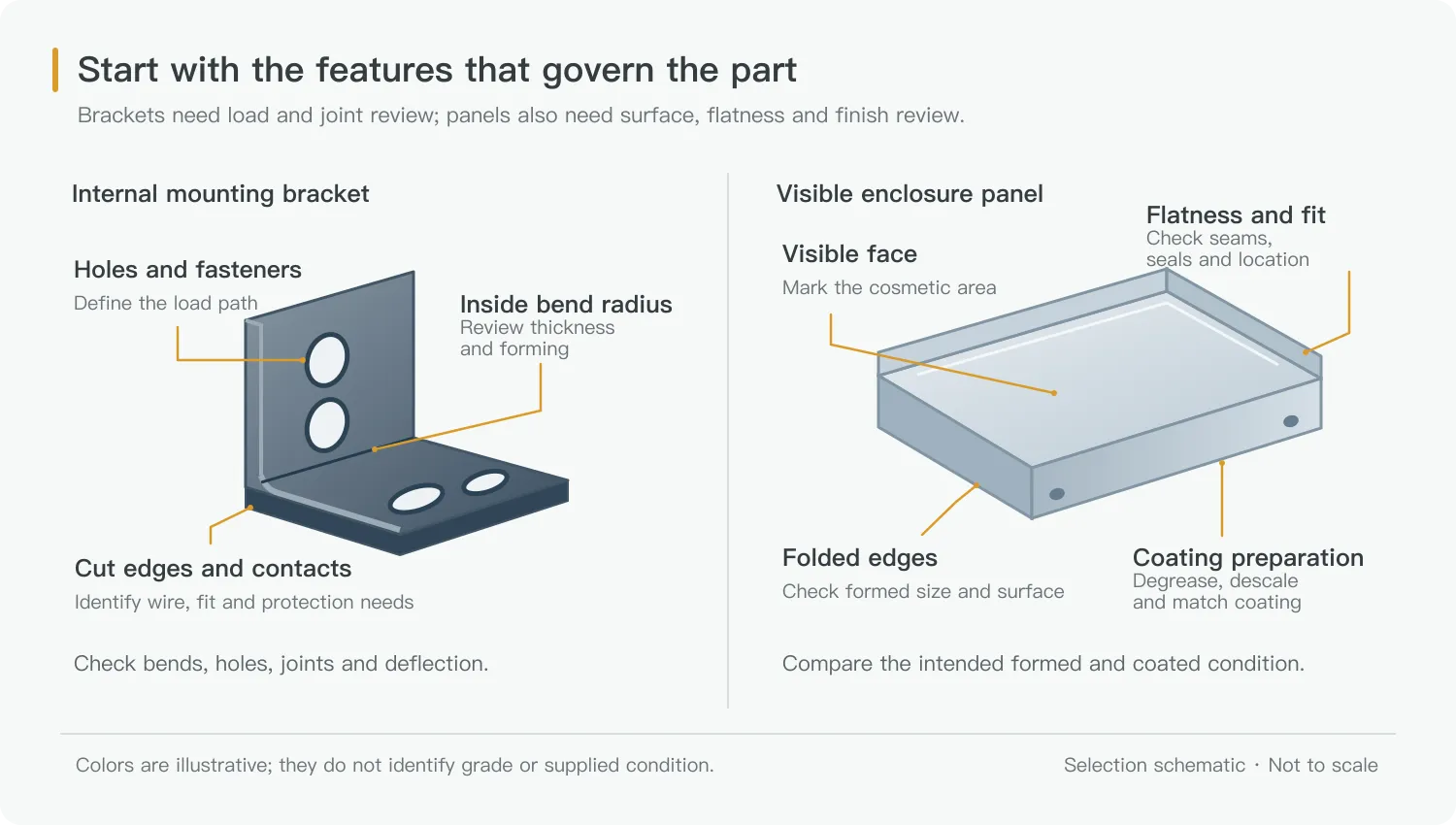
For an internal bracket, start by locating the load path and assembly interfaces: where the load enters, which bend, hole or welded joint it passes through, and where it is transferred. For a visible panel, first identify cosmetic faces, assembly edges and areas prone to distortion. Both parts may have several material options; the difference is which requirements narrow the candidates first.
| Part situation | How to compare candidates | What to check on the sample |
|---|---|---|
| Internal equipment mounting bracket with a final paint or powder-coat finish | Confirm loads, joints and forming first, then compare the complete treatment routes for as-rolled and pickled hot-rolled sheet | Bends and holes, deformation after installation, joint quality, cleaning and coating results |
| Visible enclosure panel requiring a consistent coated appearance | Consider a specified cold-rolled surface; assess pickled sheet against the same finished-appearance standard | Scratches and forming marks on visible faces, flatness, assembly gaps and appearance after coating |
| Cover with recesses, raised features or deeper formed details | Compare grades and conditions suited to the forming requirement first, then compare surface and price | Areas prone to thinning or cracking, springback, feature dimensions and the formed surface |
These are selection situations, not fixed material recipes. If a panel has an agreed appearance sample, a sample made after changing the input material should undergo the same forming, cleaning and coating, then be compared under the agreed viewing conditions. The color and smoothness of a flat sheet alone cannot establish whether the finished part is acceptable.
4. Stronger material is not automatically easier to form or suitable for direct thinning
For structural parts that need bending, explicitly communicate the cold-forming requirement to the material supplier. A structural strength category alone cannot prove that a particular tight bend or draw will work. Mills also specify separate ordering conditions for structural steel intended for cold forming. [4]
For example, when considering a change from Q235 to Q355 for a bracket, review the stress it can withstand separately from how much it deflects under load. Increasing yield strength does not raise steel's elastic modulus in the same proportion. Reducing thickness may therefore reduce bracket stiffness. Flanges, cross-sectional shape, holes and joints also affect the result; do not convert thickness directly in proportion to the numbers in the grade names. [5]
Springback occurs after a bend is unloaded. Material strength, sheet thickness and die opening all affect the final angle. When changing material, review tooling and compensation, then check the released angle and assembly dimensions. The trial should include the actual bend, hole or formed area in question, rather than only an easy straight bend. [6]
5. Compare the cost of acceptable finished parts, not just sheet prices
A lower material price may not reduce unit cost if it adds cleaning, rework or cosmetic sorting later. Pickled sheet removes some scale-removal work, but oil contamination and subsequent operations still need review. Even when cold-rolled sheet meets the specified input surface condition, handling scratches, forming marks or coating defects can still occur.
Compare quotes against the same drawing, quantities and acceptance requirements. Include material, blank preparation, forming, joining, finishing, inspection and packaging within the same scope. In particular, clarify which operation performs degreasing, rust removal or descaling, how cosmetic faces are protected, and which dimensions are inspected after coating.
A cleaner-looking surface is not a reason to omit pretreatment. Oil contamination and inadequate treatment can affect coating adhesion and protection. Match the cleaning and coating plan to the supplied material condition, part shape and service environment. [2]
6. Bring unresolved questions into the RFQ instead of guessing a grade
When a material is already specified, provide its standard and grade, supplied condition, thickness and tolerance, surface requirements and permitted substitutions. If the choice is still open, start by sharing the following information with the fabricator:
- A drawing, sketch or photograph, together with the part's use and the components it must fit.
- The bracket's load direction and joint locations, or the panel's visible faces, assembly gaps and appearance sample.
- Bends, recesses, raised features and other formed areas, plus the issues you are most concerned about.
- The service environment, intended finish, expected quantity and sample-approval requirements.
Thickness, grade or finishing requirements that are undecided can be marked to be confirmed. Compare options around the part's use, then transfer the agreed material requirements into the drawing and purchasing documents. Identify who may approve a substitute and retain the required material and sample records.