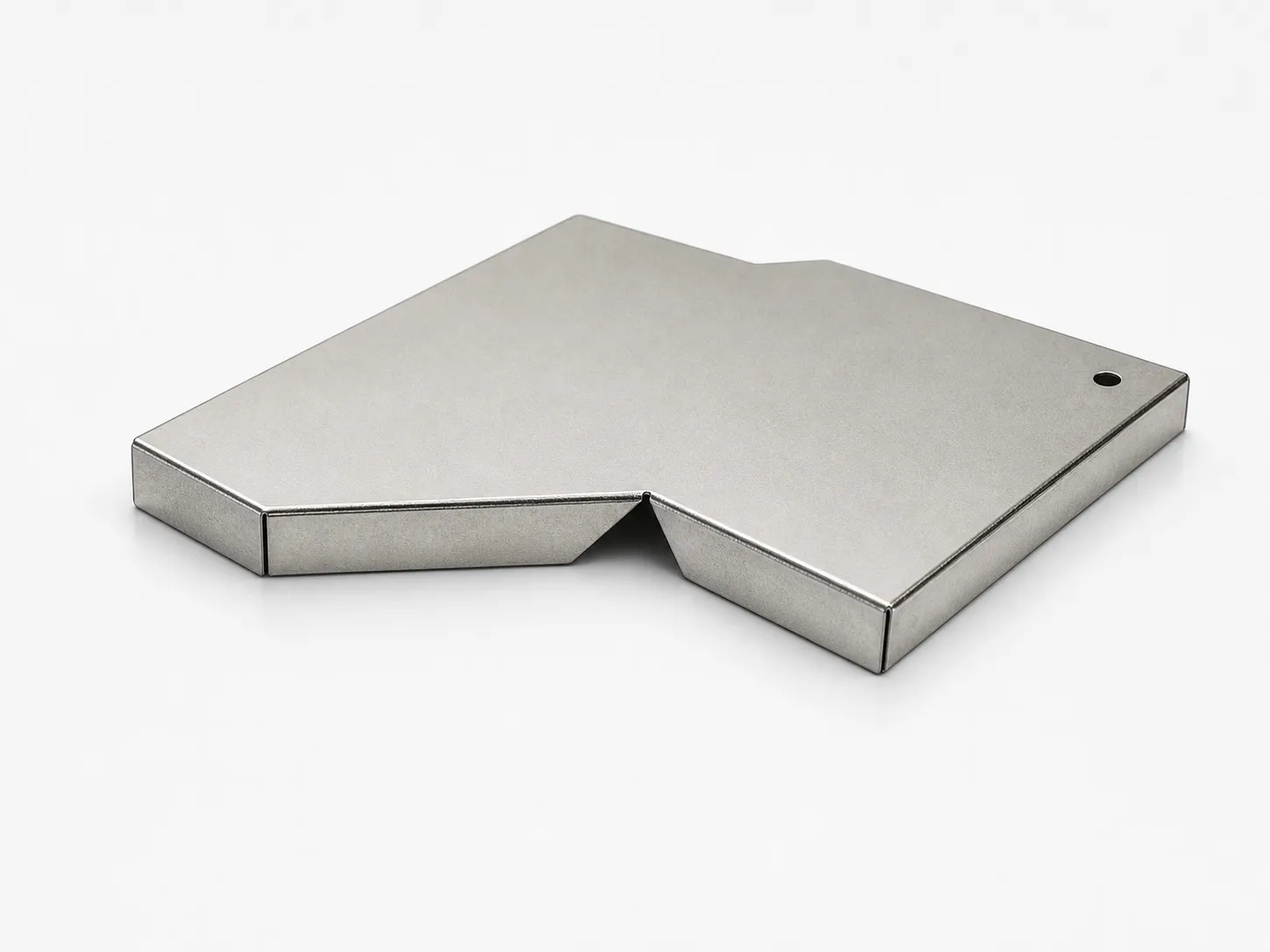
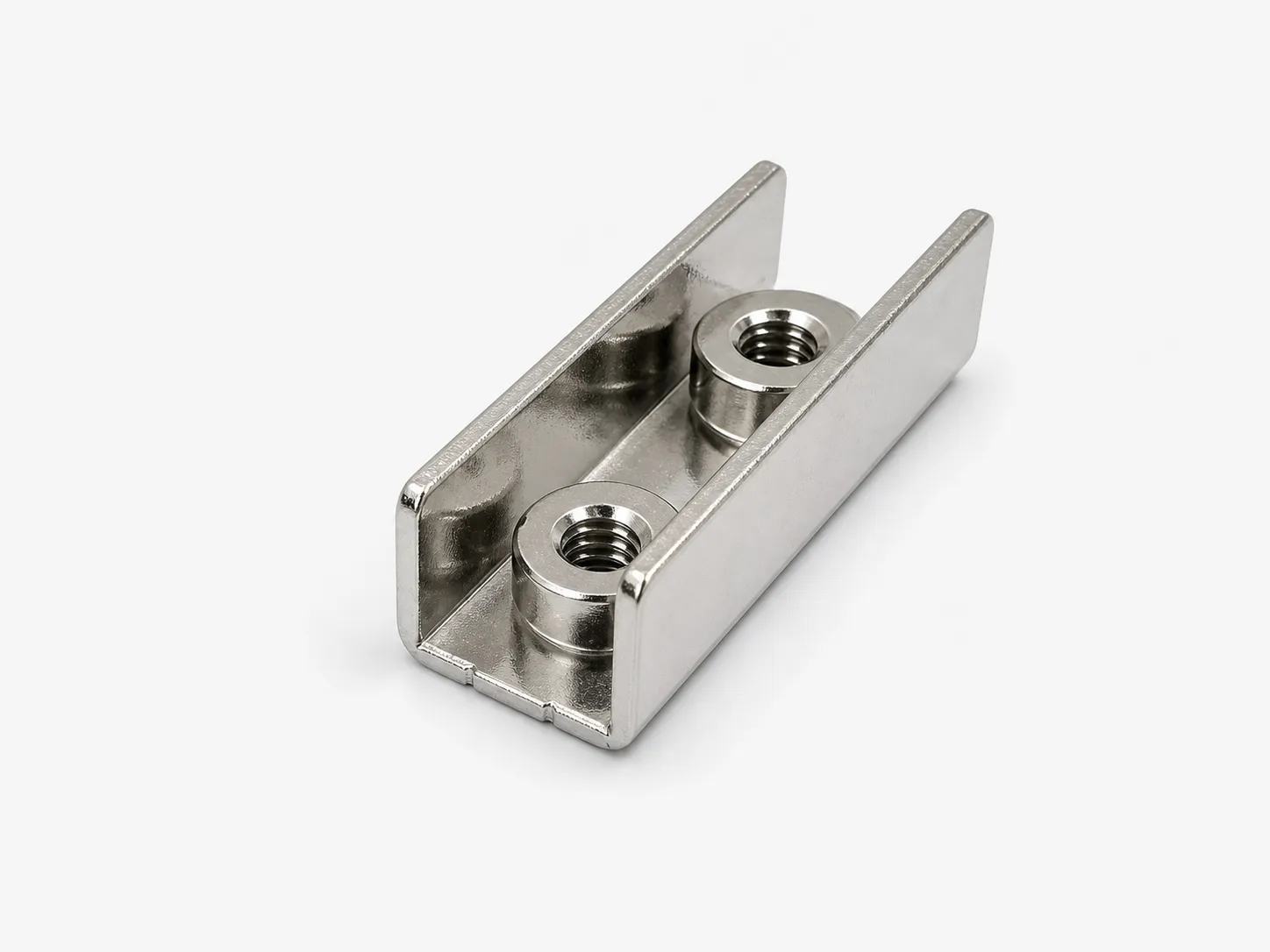
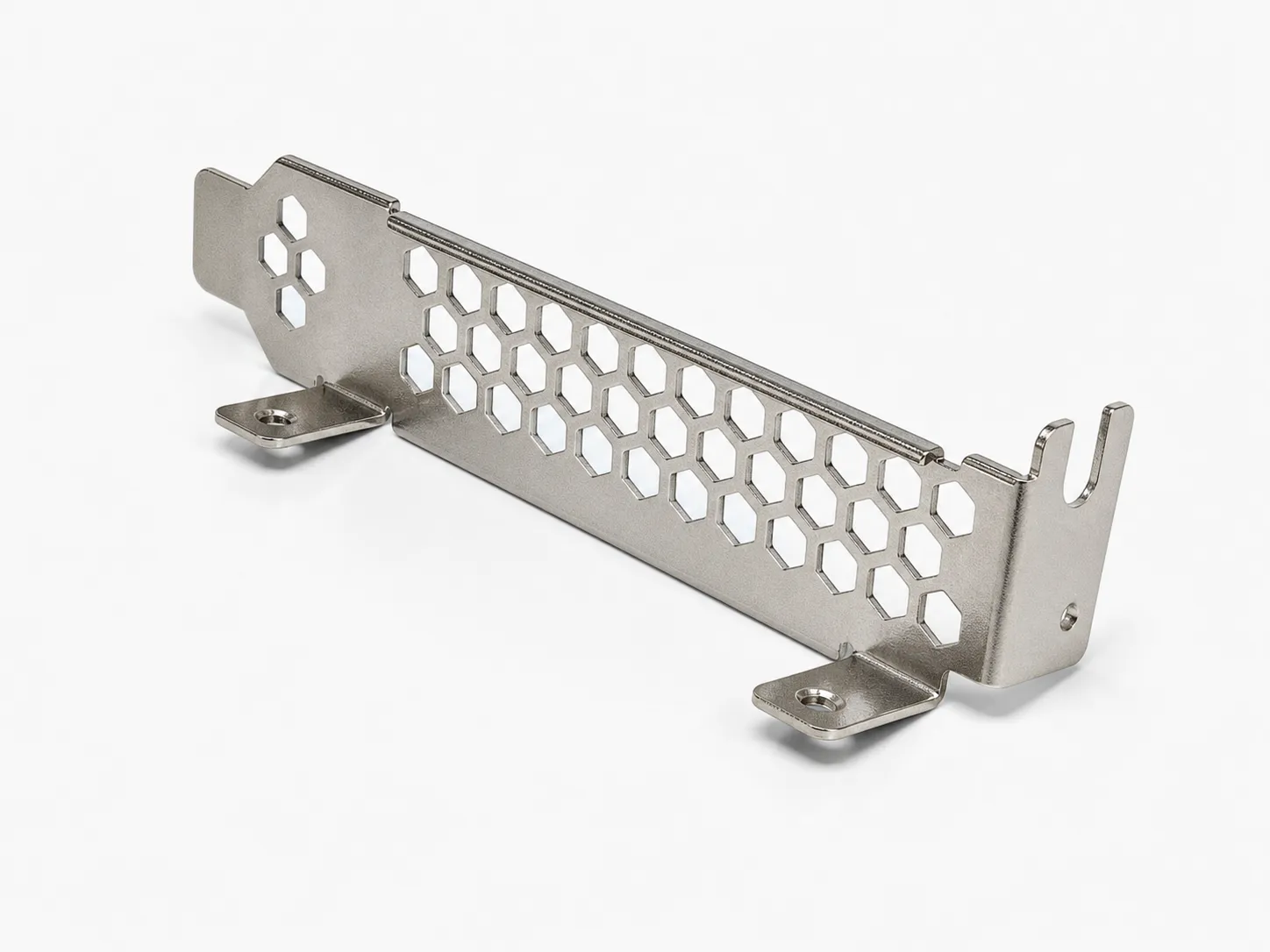
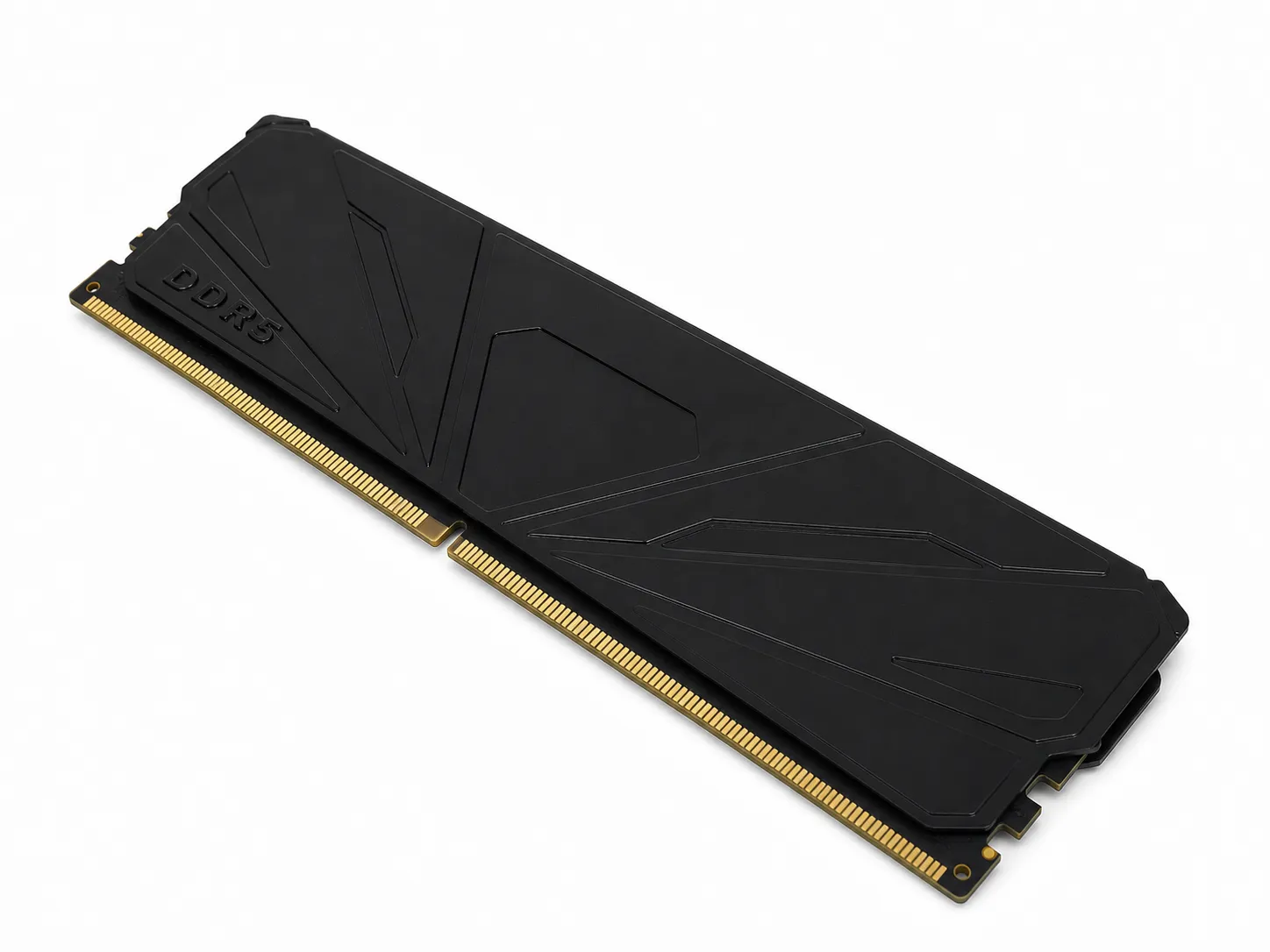
RFQ inputsDrawings, samples, material, finish, annual quantity and inspection notes.
OEM metal stamping capability
Custom Metal Stamping Services for OEM Parts
Send drawings or samples for engineering review before tooling. HARVLAND helps OEM teams move from stamping feasibility and no-MOQ sample approval to finished mass production parts.
Short answer
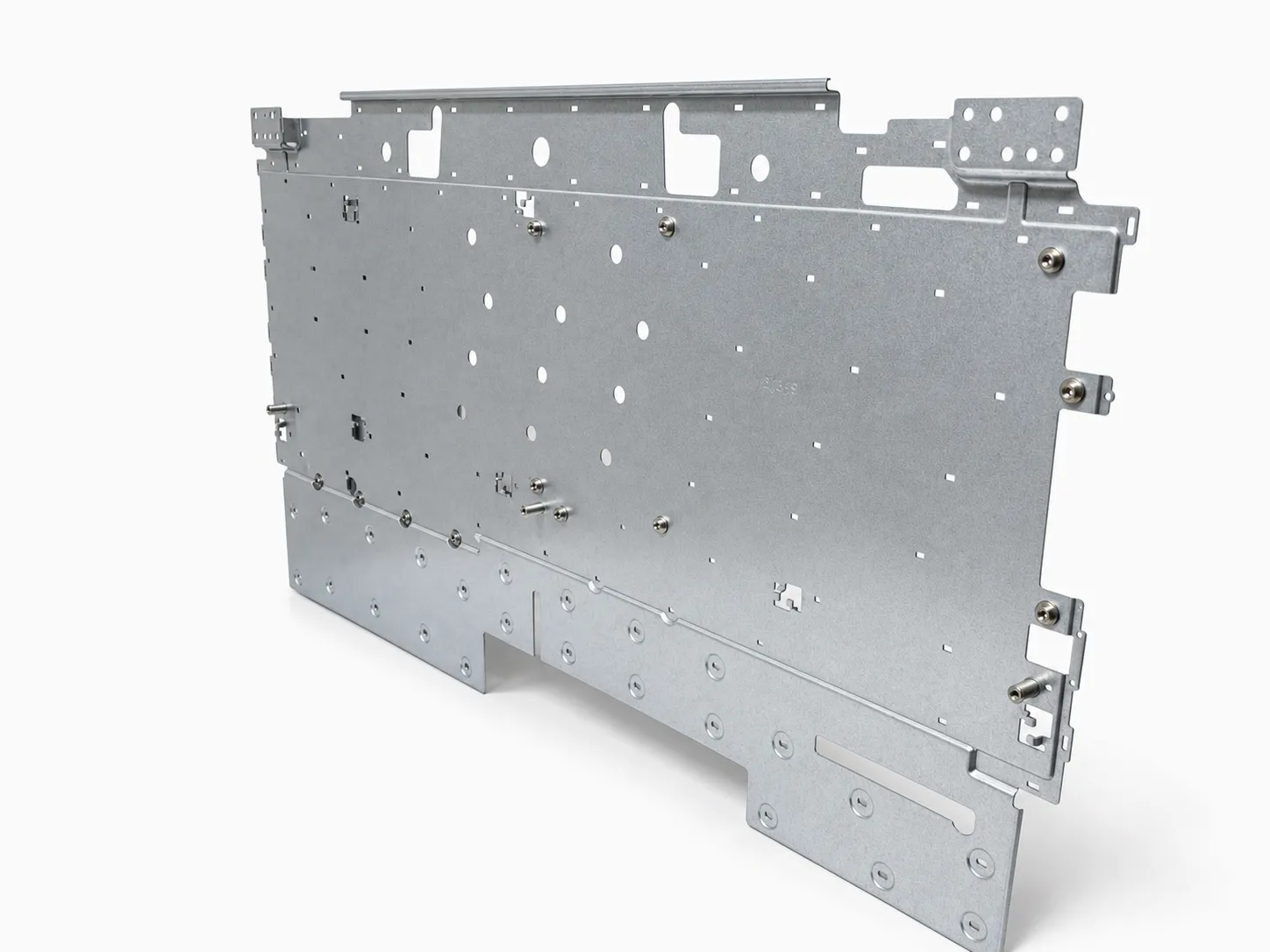
HARVLAND reviews custom metal stamping for OEM brackets, shields, covers and electronic parts from drawings or samples. DFM happens before tooling. Sheet thickness 0.2–2.0 mm can be reviewed; critical features can hold ±0.02 mm when the drawing and process allow. No-MOQ samples are available when the route is feasible, then finishing and inspection can be planned for repeat production.
DFM reviewbefore tooling decisions
±0.02 mm tolerancefor critical features, subject to drawing and process review
0.2–2.0 mmsheet thickness range
ISO 9001 / ISO 14001quality and environmental management systems
No MOQfor sample validation
Finish + inspectionplanned for your project
Engineering reviewDFM, tolerance, burr direction, forming risk and tooling route.
Production outputSamples, inspection reports, pilot run and controlled shipment planning.
Process path
From drawing review to inspected production
Each capability area follows the same manufacturing path so buyers can connect service details to quote requirements.
View full production process01
Customer Input
Collect drawings, 3D/2D files, material, finish, volume, inspection and packaging requirements.
02
DFM Review
Review stamping feasibility, tolerance risk, springback, burr direction and tooling direction.
03
Quote & Sampling
Confirm quotation, sample route, project plan, inspection plan and sample validation path.
04
Tooling & Die
Design production tooling, run T0/T1/T2 trials, correct dimensions, burr and springback.
05
Mass Production QC
Run pilot production, customer approval, PPAP if required and controlled mass production.
Start with drawings, samples or early part details
A useful custom metal stamping quote starts by removing uncertainty around the part, not by guessing a unit price. Share the geometry, material, thickness, finish and target quantity so engineering can judge the route before tooling money is committed.
- 2D drawings, STEP/STP, DWG, DXF, photos or physical samples can be reviewed.
- Material range is typically 0.2mm-2.0mm steel, stainless steel, aluminum, copper and galvanized steel.
- Useful RFQ details include annual volume, tolerance notes, burr direction, finish, packaging and inspection needs.
Check stamping feasibility before the die is built
Buyers want fewer surprises after the PO. The review focuses on manufacturability risks that can change cost, lead time and repeatability before production tooling starts.
- Review bend radius, hole spacing, forming depth, springback, flatness, tolerance stack and burr control.
- Confirm whether blanking, bending, forming, deep drawing or progressive die stamping is the right route.
- Flag drawing details that should be adjusted before sample tooling or production die development.
Plan sampling, stamping die development and approval
For custom stamped parts, tooling is where most buyer risk sits. A clear approval path covers die design, T0/T1/T2 trials, dimensional correction, sample approval and production release.
- Prototype or sample tooling can be discussed when the design is still being validated.
- Production die development is planned around geometry, material behavior, annual demand and inspection level.
- Sample feedback is used to correct dimensions, forming marks, burr, springback and surface concerns before mass production.
Move from approved samples to stable stamped parts
Once samples are approved, sourcing teams still need repeatable quality, finish consistency and clear communication. The manufacturing route connects stamping, surface treatment, inspection and packaging in one quote path.
- Stamped brackets, shields, covers, chassis parts, terminals, clips, enclosures and electronic metal parts can be reviewed.
- Finishing options can include plating, powder coating, ink coating, e-coating, anodizing, passivation, cleaning, deburring, screen printing, pad printing or project-specific treatment.
- Inspection planning can include dimensional checks, appearance criteria, sample reports, packaging requirements and batch control.
Buyer questions
Common buyer questions
Have a question about your part? Leave a message and a reply email.
What information is needed for a custom metal stamping quote?
Send drawings or samples, material, thickness, finish, tolerance expectations, annual quantity and any inspection, packaging or compliance requirements. If the design is early, photos and target use can still help the first review.
Can you review manufacturability before tooling?
Yes. DFM review before tooling checks stamping feasibility, bend and forming risk, burr direction, tolerance concerns, material behavior and whether the design needs adjustment before die development.
Does every custom stamped part need a production die?
Most repeat production parts need dedicated tooling, but the best route depends on geometry, target volume and validation stage. Early projects may start with sample review or prototype tooling before production die approval.
Can custom stamping include surface finishing and inspection?
Yes. Stamping can be planned together with deburring, plating, powder coating, ink coating, e-coating, anodizing, passivation, cleaning, screen printing, pad printing, dimensional checks, appearance inspection and project-specific packaging.
Your question has been recorded
Thank you. We will reply to the email address you provided. You do not need to submit again.
Question ID:
Contact us
Send drawings, material, thickness, finish and target quantity for review.