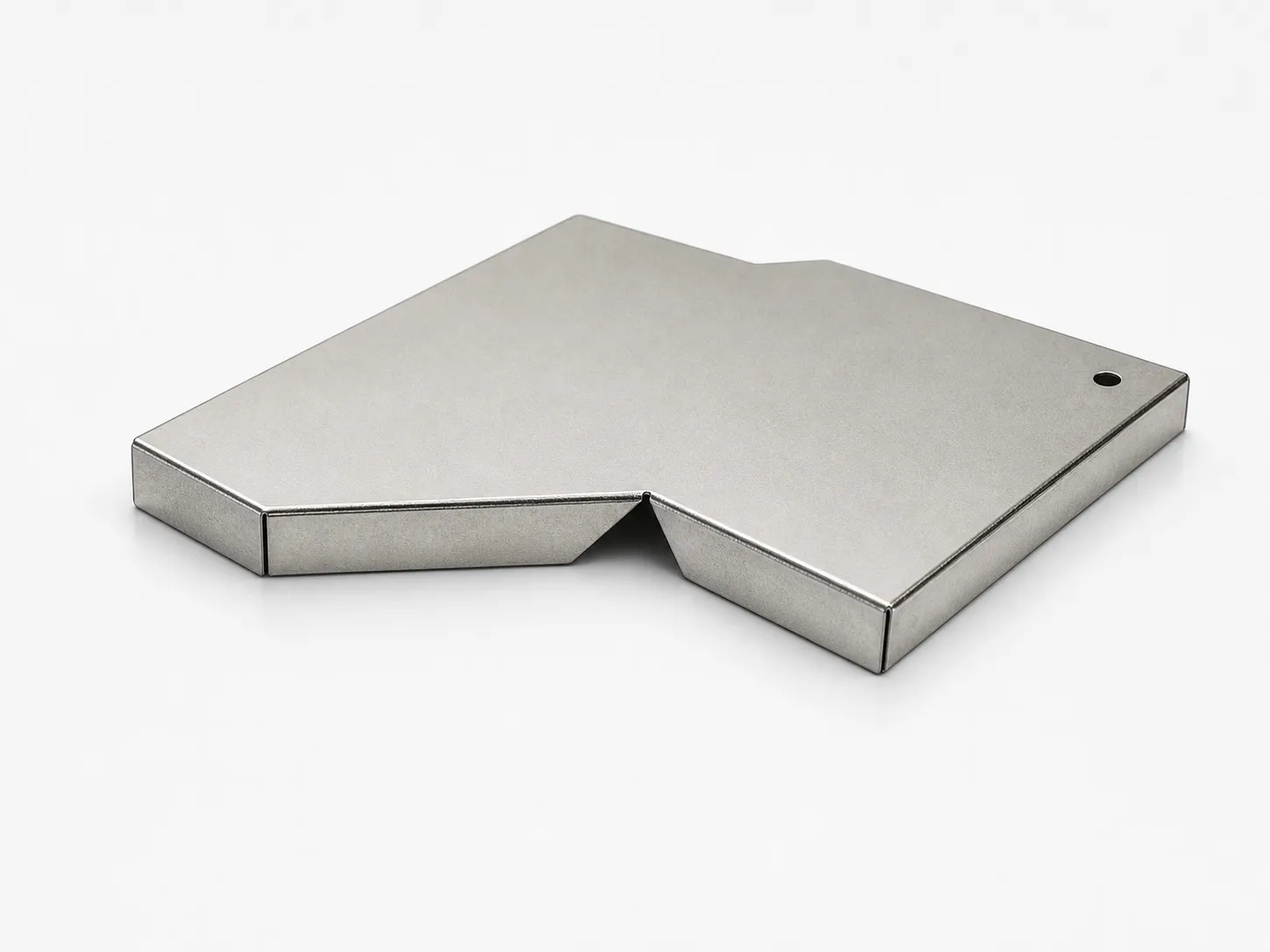
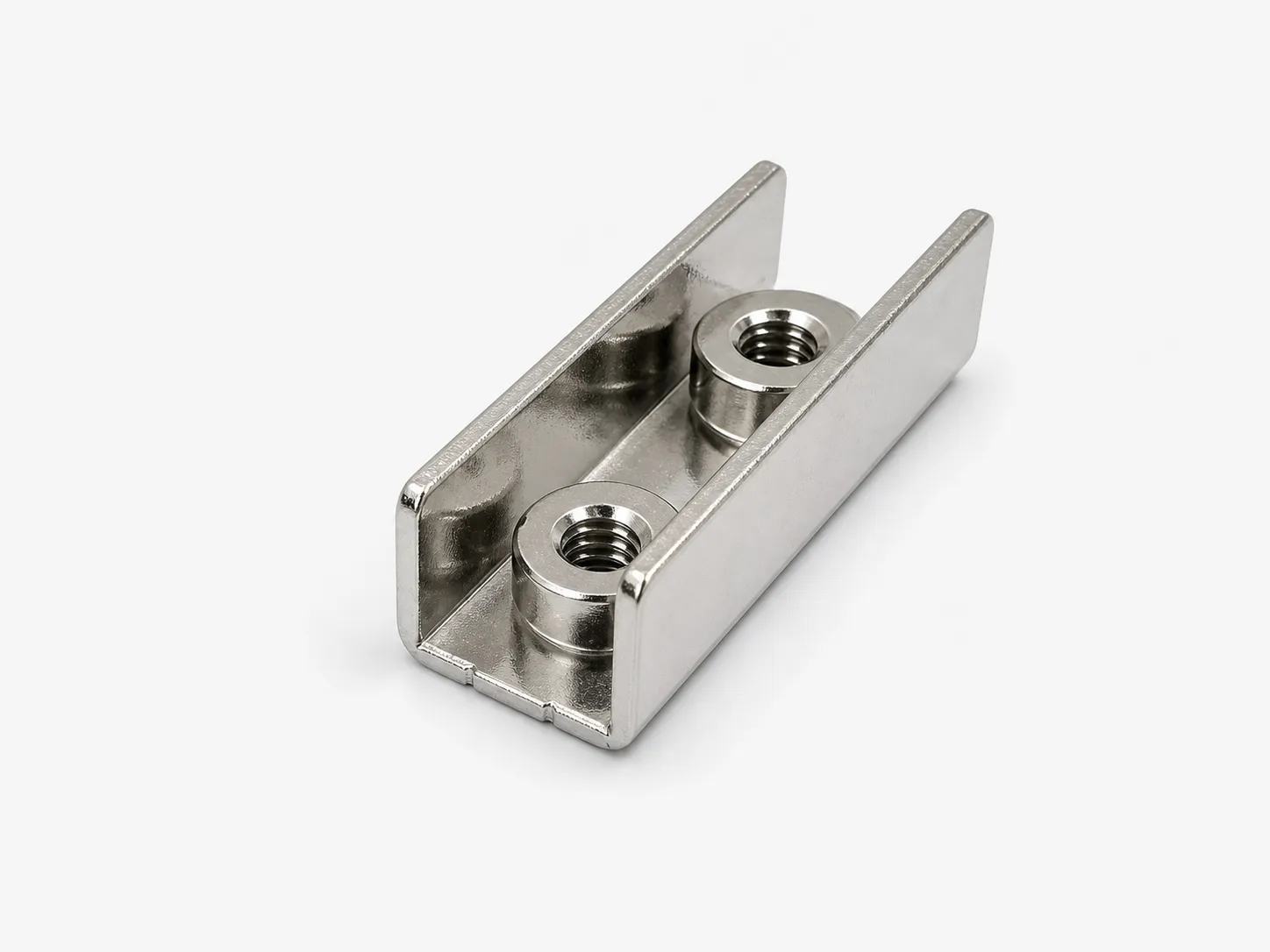
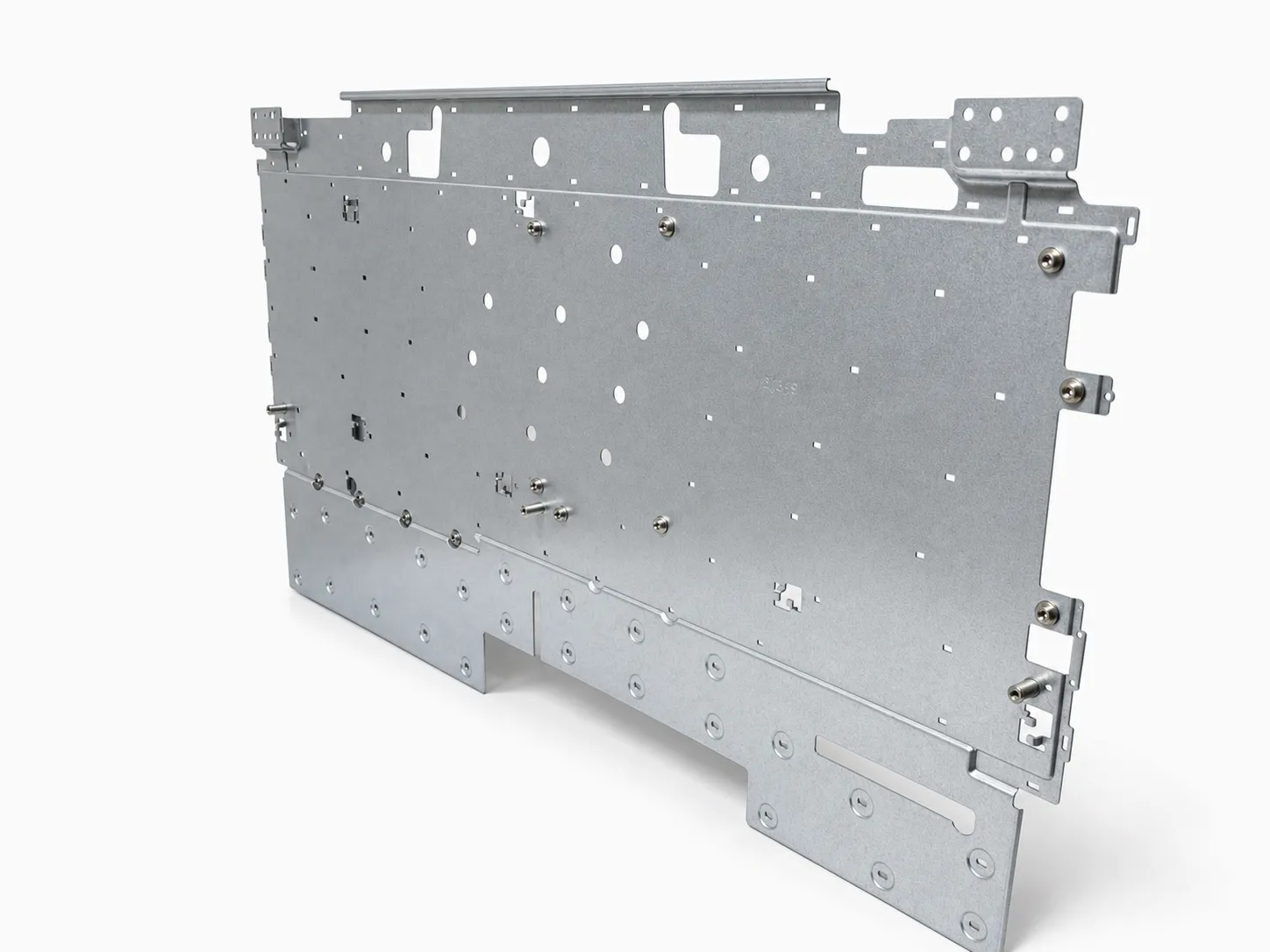
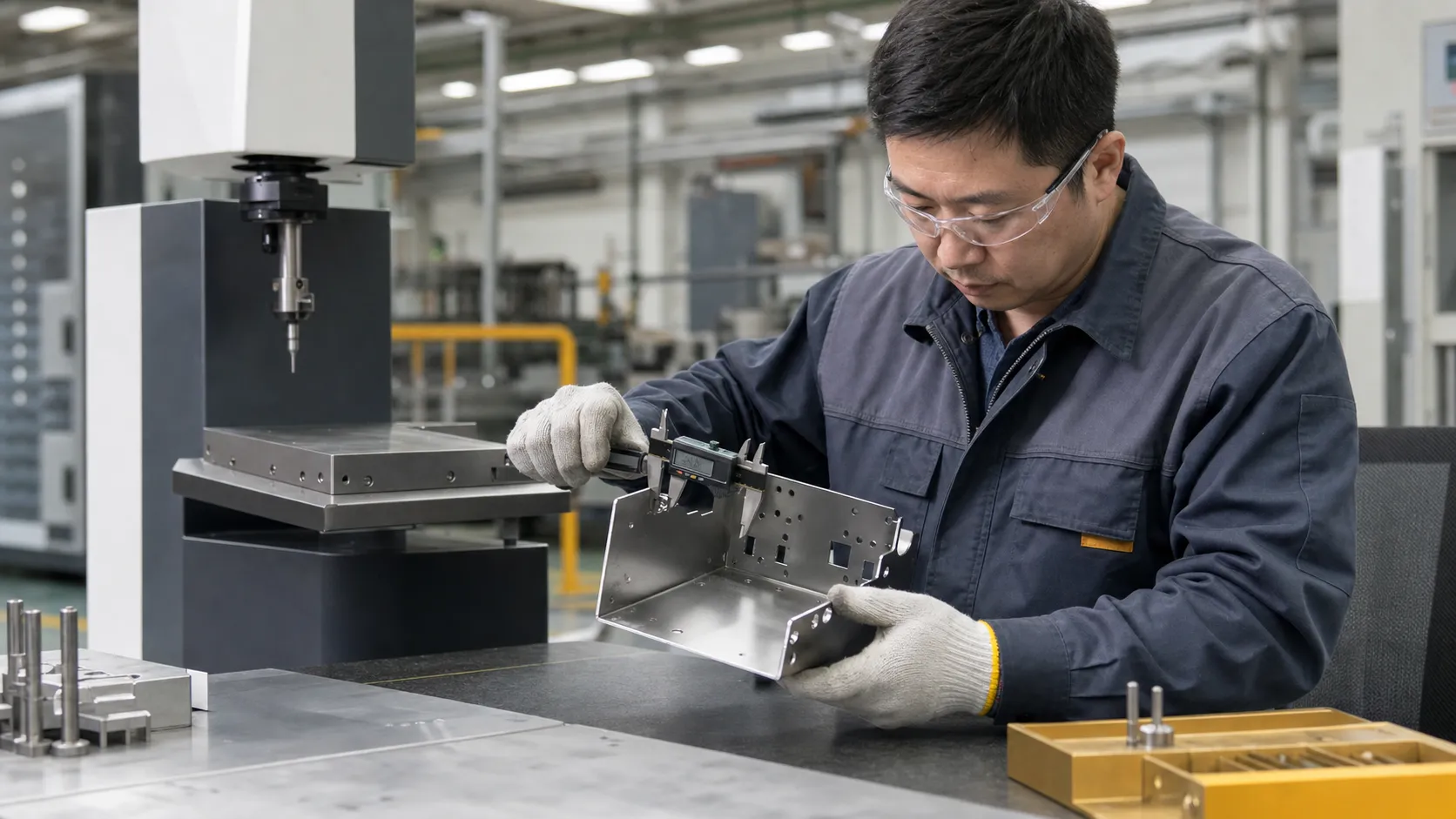
RFQ inputsDrawings, samples, material, finish, annual quantity and inspection notes.
OEM metal stamping capability
Precision Metal Stamping Manufacturer for OEM Components
Precision stamping is not one universal tolerance claim. It is a controlled manufacturing route that aligns material, tooling, datums, burr direction, critical features and inspection with the part's real fit and function before repeat production.
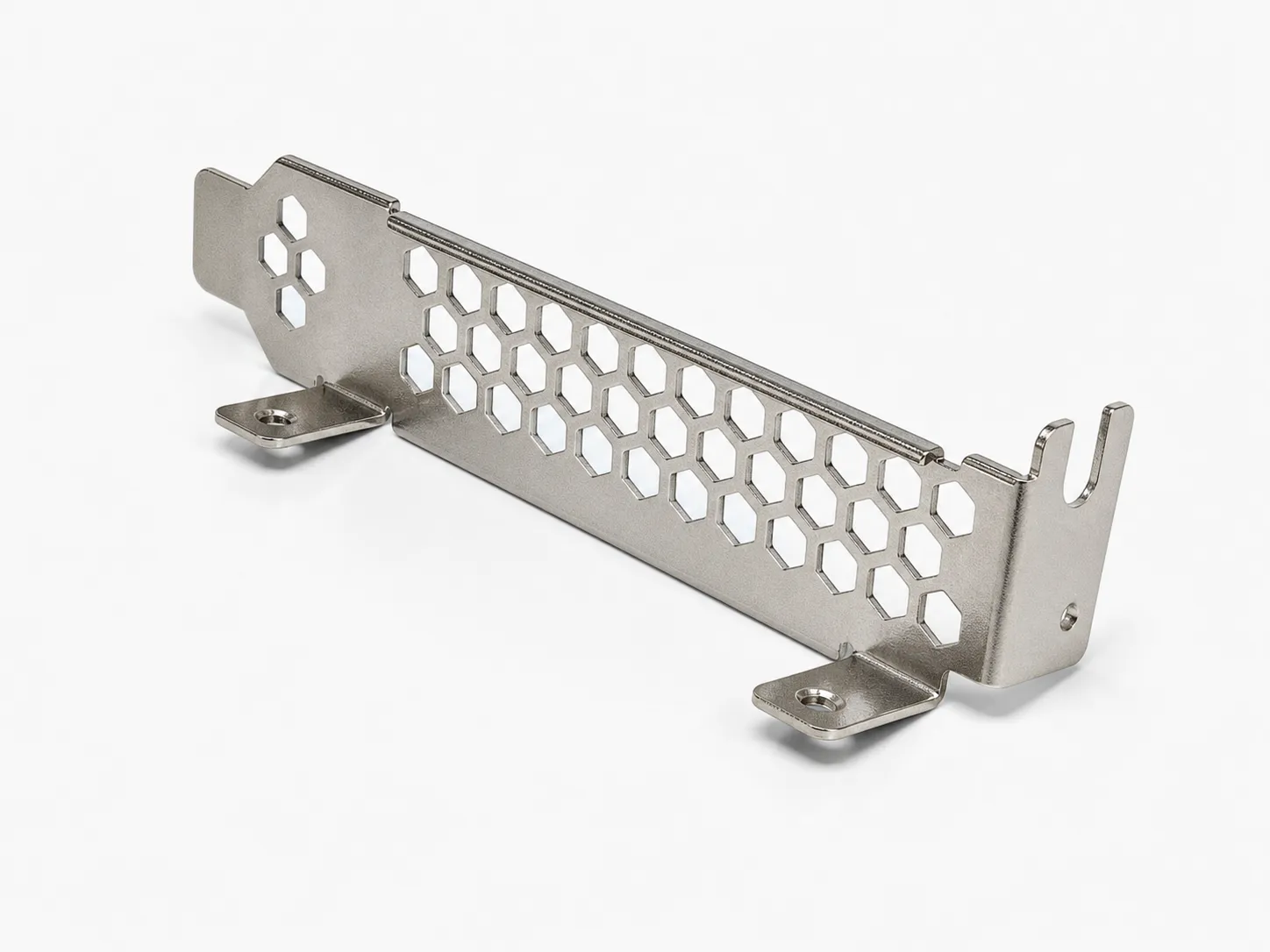
DFM reviewbefore tooling decisions
±0.02 mm tolerancefor critical features, subject to drawing and process review
0.2–2.0 mmsheet thickness range
ISO 9001 / ISO 14001quality and environmental management systems
No MOQfor sample validation
Finish + inspectionplanned for your project
Engineering reviewDFM, tolerance, burr direction, forming risk and tooling route.
Production outputSamples, inspection reports, pilot run and controlled shipment planning.
Process path
From drawing review to inspected production
Each capability area follows the same manufacturing path so buyers can connect service details to quote requirements.
View full production process01
Customer Input
Collect drawings, 3D/2D files, material, finish, volume, inspection and packaging requirements.
02
DFM Review
Review stamping feasibility, tolerance risk, springback, burr direction and tooling direction.
03
Quote & Sampling
Confirm quotation, sample route, project plan, inspection plan and sample validation path.
04
Tooling & Die
Design production tooling, run T0/T1/T2 trials, correct dimensions, burr and springback.
05
Mass Production QC
Run pilot production, customer approval, PPAP if required and controlled mass production.
What precision metal stamping should control
Precision metal stamping focuses process and inspection effort on the dimensions and surfaces that govern assembly, contact, motion or appearance. A practical review distinguishes those critical features from normal process dimensions instead of applying the tightest tolerance to every hole, bend and edge.
- Identify datums, hole or slot position, formed height, flatness and mating features that control fit.
- Mark burr direction, edge condition, contact zones and cosmetic faces before tooling.
- Define how critical dimensions will be measured and in which part condition.
- Keep non-critical dimensions on a realistic general tolerance to control tooling and inspection cost.
Review precision stamped parts by function and material
Precision stamping can support drawing-based brackets, clips, contacts, terminals, shields, I/O hardware, covers and other small or formed OEM components. Feasibility depends on the exact geometry, material condition, thickness, quantity and finish; electrical, thermal or system performance remains subject to buyer validation in the intended assembly.
- Steel and stainless parts for brackets, clips, retainers, covers and structural hardware.
- Copper and brass parts for terminals, contacts, busbars and conductive interfaces.
- Aluminum parts for light covers, brackets and thermal or appearance-driven hardware.
- Tinplate, nickel silver, galvanized steel and project-specific sheet when the drawing defines the need.
Connect tolerances to stamping behavior before die design
Hole position, narrow webs, short flanges, bend sequence, springback, material grain and coating buildup can interact. The DFM review should show which dimensions are measured from which datum, whether they are checked before or after finishing and where the tooling route may need relief, inserts or sample tuning.
- Review small holes, slots, edge distance and hole-to-bend spacing against thickness and material strength.
- Check bend radii, formed heights, embosses, tabs and spring features for access and springback.
- Separate in-die dimensions from dimensions affected by deburring, plating, anodizing or coating.
- Use bilateral, profile, position or functional gauge requirements only where the assembly needs them.
Choose the tooling route from volume, geometry and revision risk
Precision does not automatically mean progressive tooling. Single-station, compound, progressive or mixed fabrication routes can all be appropriate. The right choice balances first-part timing, tooling investment, repeatability, expected design changes and annual demand before samples are ordered.
- Use flexible or simpler tooling when quantities are low or the design is still changing.
- Consider progressive tooling when stable repeat demand and multiple operations justify it.
- Approve the production-intent material and finish rather than an unrepresentative sample substitute.
- Record sample corrections and accepted deviations under the current drawing revision.
Define evidence for sample approval and repeat orders
A precision stamping RFQ should state what evidence the buyer needs, not only that the part is precision. Drawings, sample checks, inspection methods, appearance standards and packaging should describe the acceptance basis before a supplier prices tooling and production.
- Send controlled 2D/3D files, material condition, thickness, quantity bands and assembly context.
- List critical dimensions, datums, measurement method, sample quantity and approval owner.
- Define finish, masking, cleanliness, compliance records, cosmetic criteria and protective packaging.
- Request first-article or production records only for the characteristics the program actually needs.
Buyer questions
Common buyer questions
Have a question about your part? Leave a message and a reply email.
What makes metal stamping precision stamping?
Precision stamping uses controlled tooling, material, datums, process settings and inspection to hold the features that affect part fit or function. The achievable value must be reviewed from the specific drawing rather than assumed from one universal tolerance.
What tolerances can precision metal stamping hold?
Tolerance capability depends on material, thickness, feature type, distance between features, forming sequence, tooling route and measurement method. Send the drawing so critical dimensions can be reviewed individually.
Which materials can be used for precision stamped components?
Projects can use stainless steel, carbon steel, aluminum, copper, brass, tinplate, nickel silver, galvanized steel or another specified sheet material when its grade, condition, thickness and finish are defined.
Can low-volume parts use precision stamping?
Yes, when the geometry and acceptance requirements fit an economical sample or single-station route. Low volume does not always justify a progressive die, so tooling should be selected from total program needs.
What should I send for a precision stamping RFQ?
Send 2D and 3D files, material and thickness, quantities, critical dimensions and datums, finish, burr direction, sample and inspection expectations, assembly context and packaging requirements.
Your question has been recorded
Thank you. We will reply to the email address you provided. You do not need to submit again.
Question ID:
Contact us
Send drawings, material, thickness, finish and target quantity for review.