
Server chassis
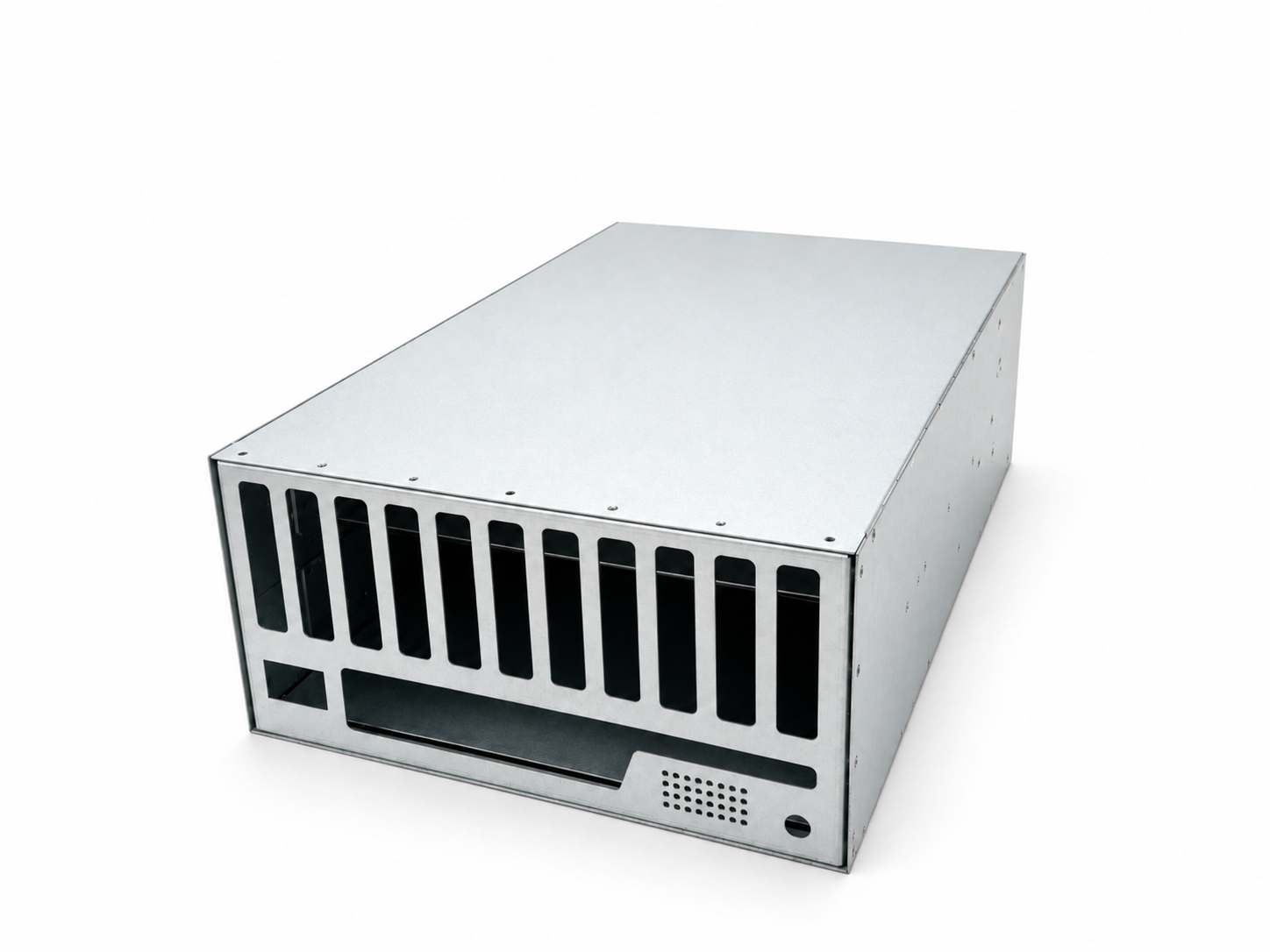
A reference for coordinating panels, internal mounting and a removable cover.
- Specify mounting datums and panel openings.
- Confirm cover clearance, fasteners and assembly access.
Upload drawings for custom sheet metal enclosures so fit, mounting, ventilation, finish, installed hardware and assembly can be reviewed before production. HARVLAND supports housings, chassis, covers and equipment boxes from DFM and RFQ review through samples and repeat production.
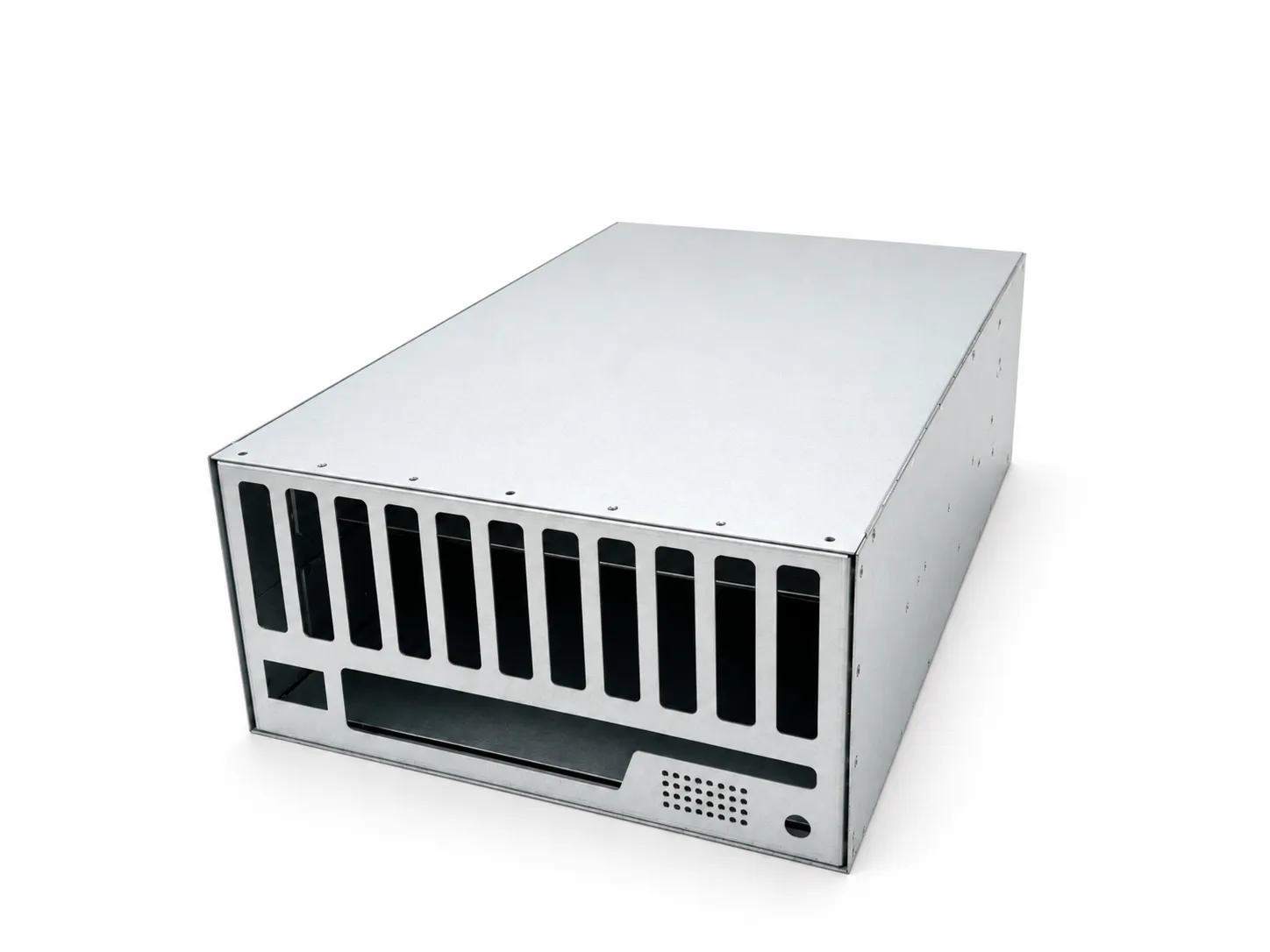
HARVLAND manufactures custom sheet metal enclosures, chassis, covers and equipment boxes for electronics OEMs from drawings. Fit, mounting, ventilation, hardware and assembly are reviewed before production. Common materials include steel, stainless steel, aluminum and galvanized steel. Powder coating, plating and anodizing can be planned with inspection; no-MOQ samples are available when the route is feasible.
Use these photographed enclosure types as references when preparing your drawings. Material, thickness, finish and manufacturing route are confirmed for each project.
A reference for coordinating panels, internal mounting and a removable cover.
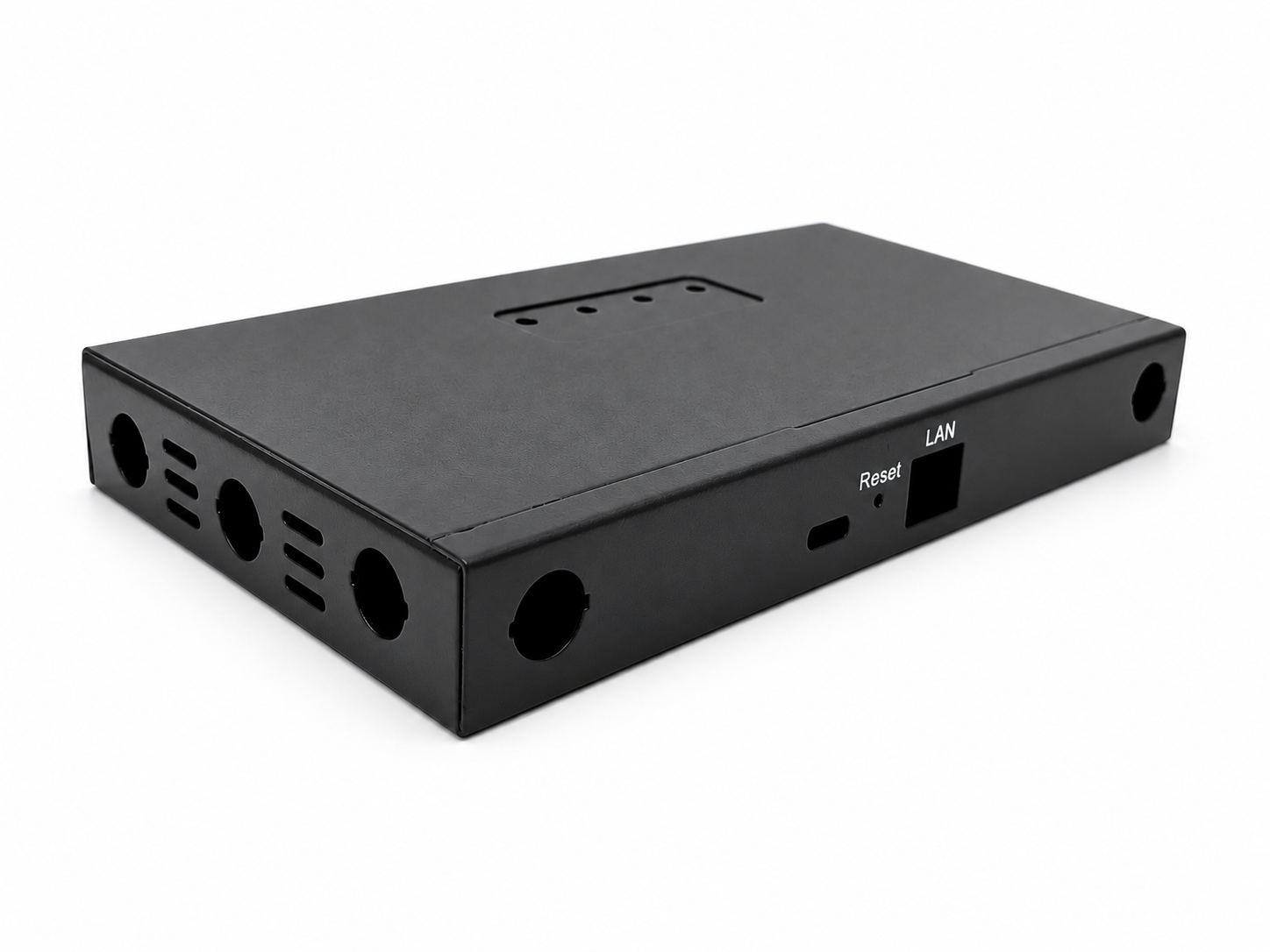
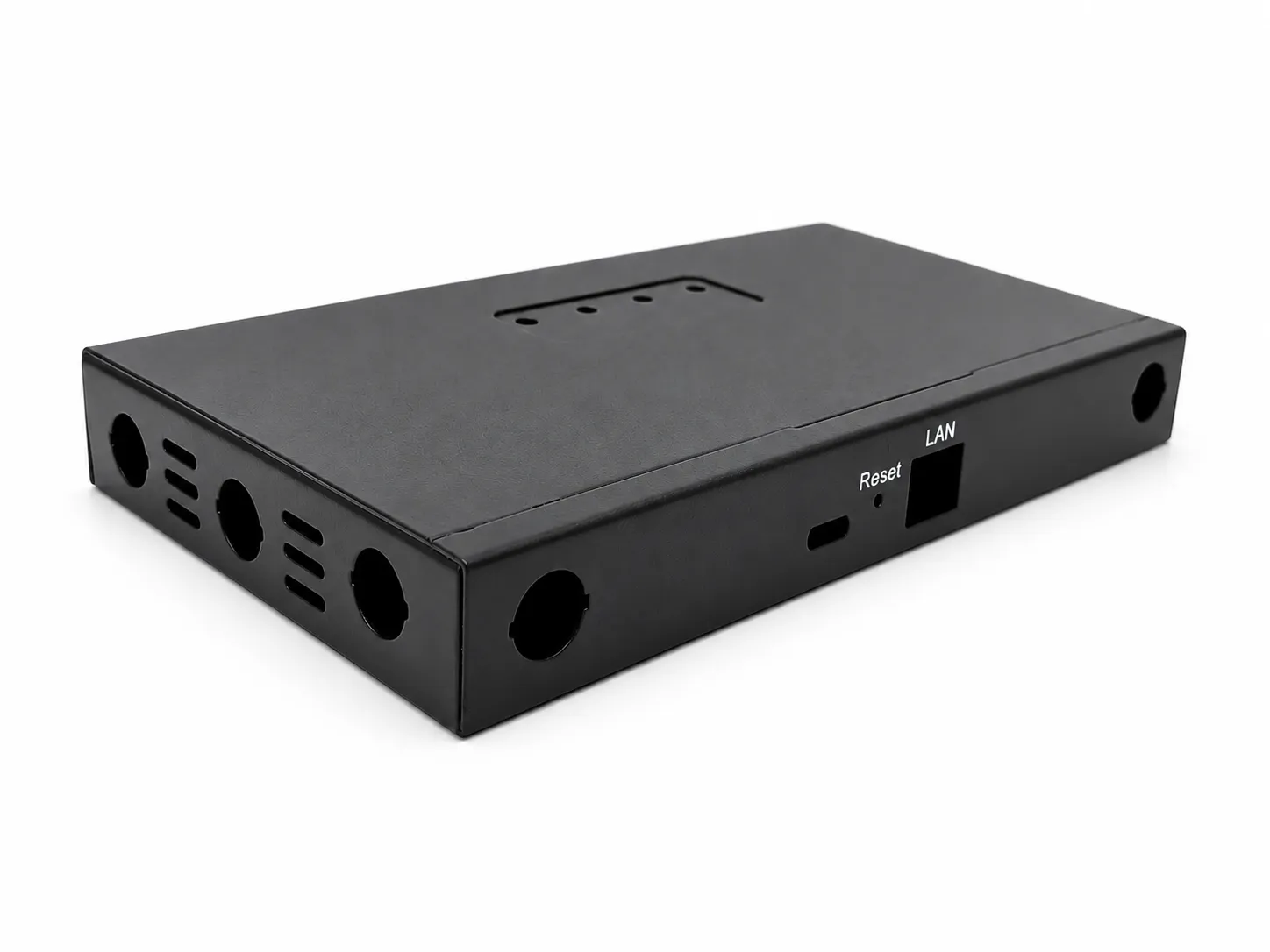
References for connector openings, antenna exits and enclosure mounting.
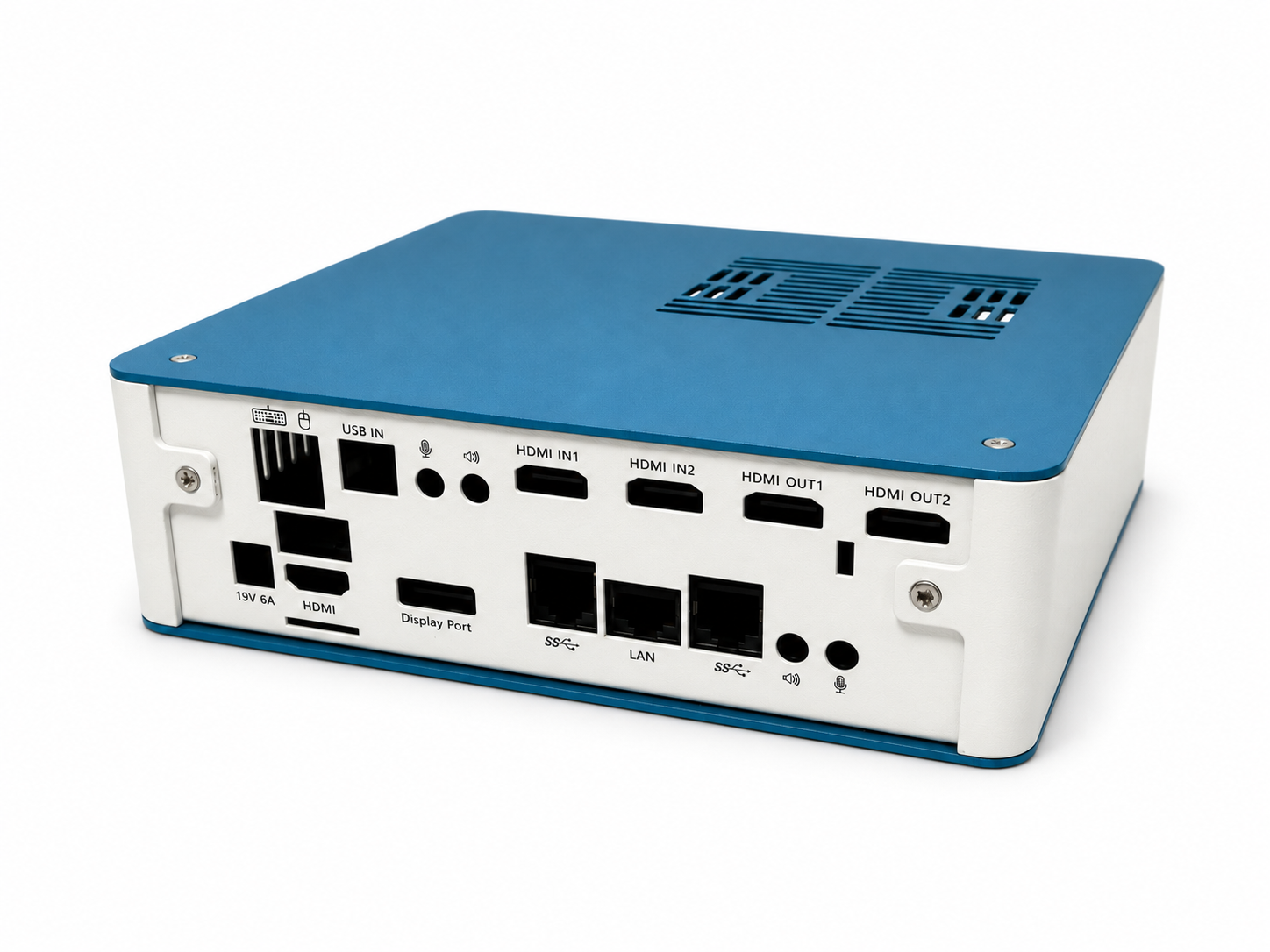
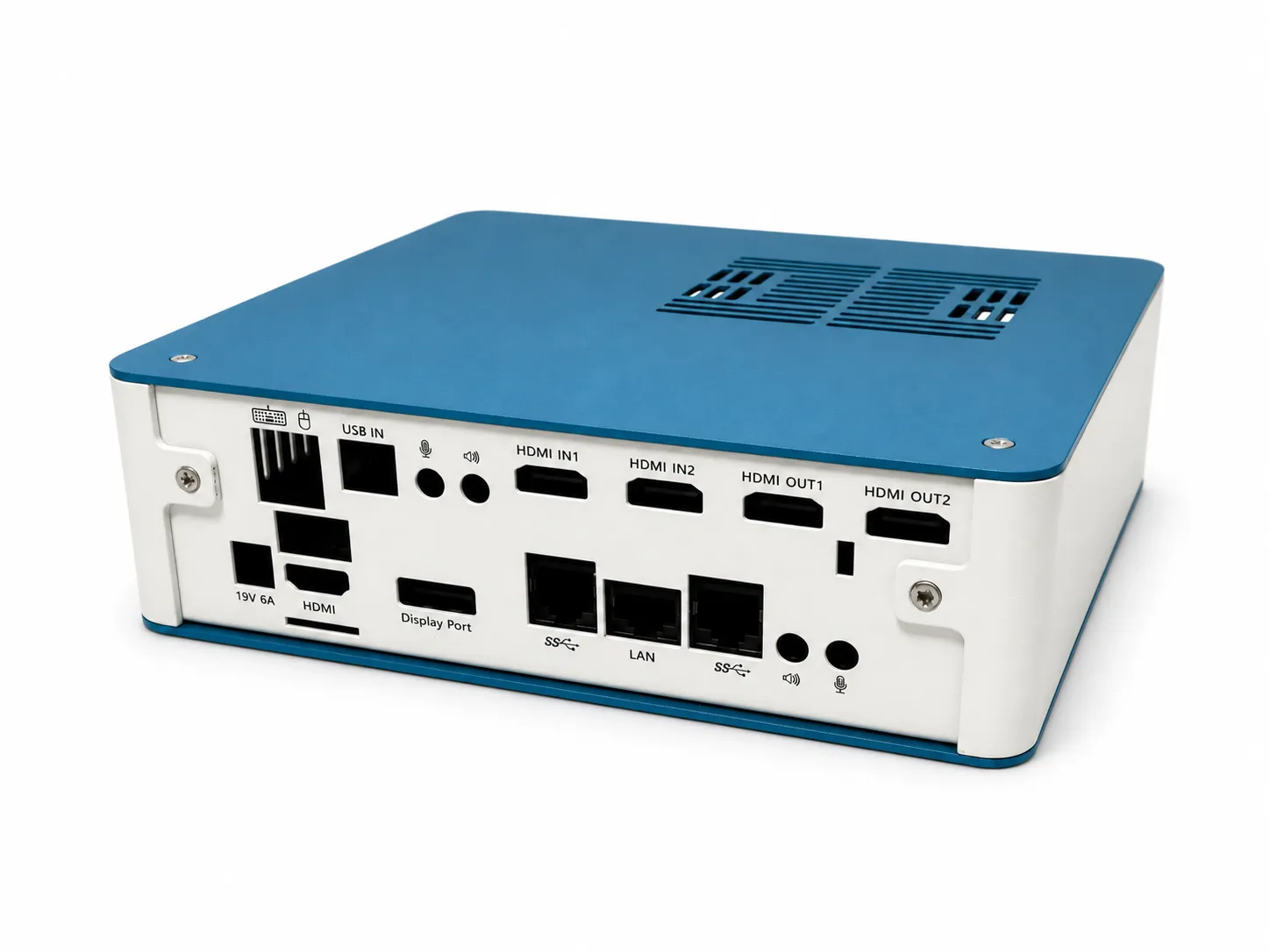
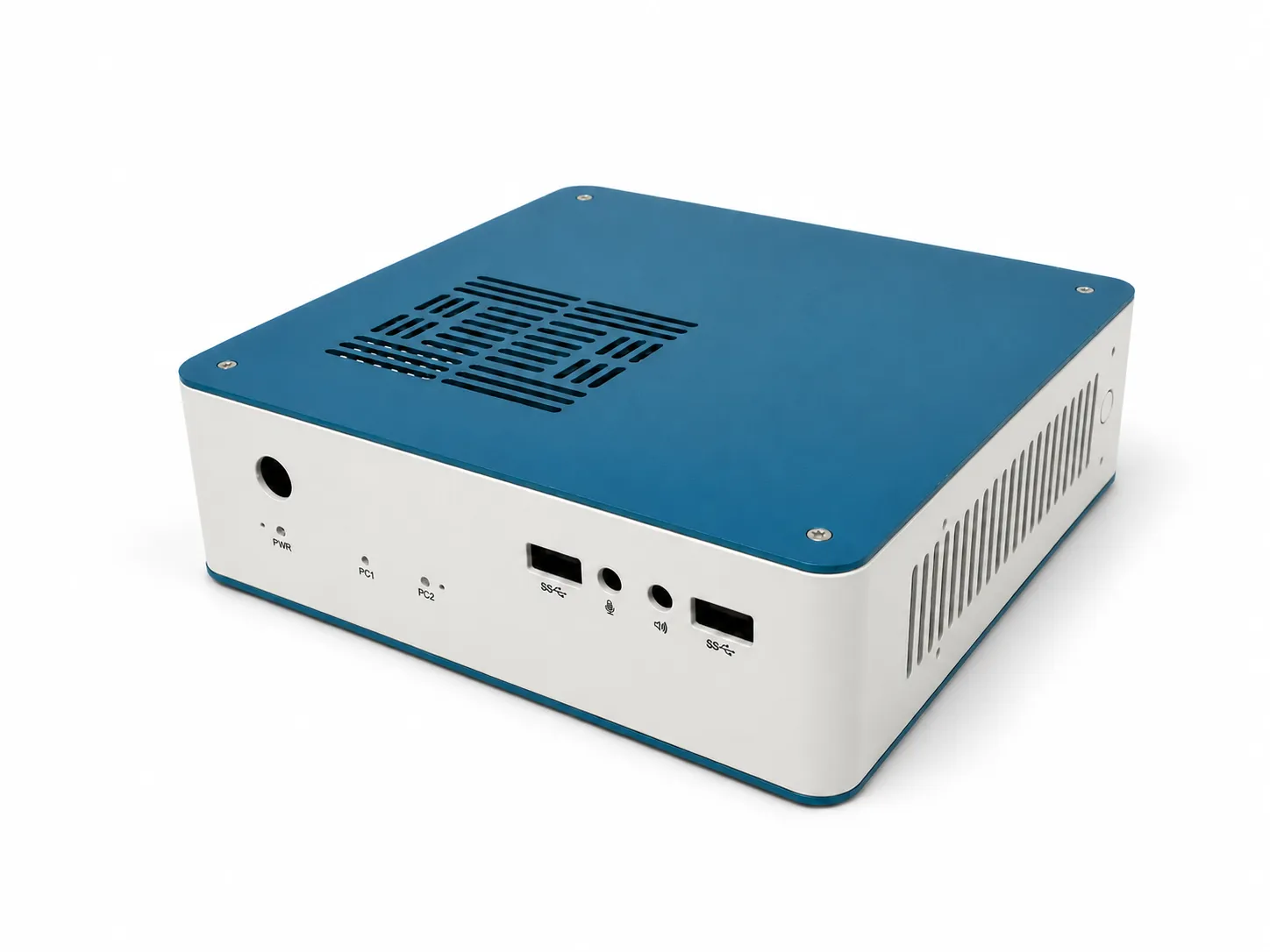
References for front and rear I/O, ventilation and cover fit in a compact assembly.
The customer could not wait for tooling: they needed samples fast, then placed an urgent 3,000-piece order before the die existed.
Laser cutting and bending provided the first enclosure for customer review.
Customer changes were incorporated before sample approval.
The same laser-and-bending route supplied urgent orders while die development ran in parallel.
The progressive die was completed and production switched to stamping.
During the 3-week die-development period, laser cutting and bending delivered three batches of 3,000 pieces each, 9,000 pieces in total. Production then switched to stamping without a supply gap.
These timings describe this project only. A new project’s schedule depends on the drawing, changes, tooling and agreed plan.
Quantity, geometry and expected design changes guide the choice of cutting, bending, joining or stamping. Tooling is reviewed as part of that choice.
Confirm interfaces, mounting, material, finish and the features that matter to your assembly.
Review feasible processes against quantity and revision plans; identify tooling and inspection requirements.
Check fit, openings, assembly and appearance against the agreed drawing and acceptance criteria.
Confirm any required fixtures or production dies, then control drawings, inspection and repeat orders to the approved revision.
Not necessarily. Drawings, quantity and expected changes determine the route. Laser cutting and bending may be suitable for samples or small batches; any necessary fixtures, special tooling or production dies must still be reviewed and confirmed for the project.
A useful quote for sheet metal enclosures needs more than outside dimensions. Boards, connectors, fans, fasteners and covers must still fit after bend allowance, finish thickness and installed hardware are considered.
Specify material, thickness, hardware and finish together. Mark coating masks, mating clearances and cosmetic surfaces so cutting, bending, hardware installation and finishing can be planned against the delivered enclosure requirements.
Enclosure sourcing risk usually appears as poor fit, finish mismatch, scratched surfaces, wrong hole positions or late assembly changes. Reviewing these points before quoting makes production expectations clear.
A complete enclosure RFQ helps engineering return a route, not just a generic price. Include both the metal part geometry and the product context when available.
These anonymized, representative routes illustrate how operations may be combined. They are not customer case studies or manufacturing specifications for any particular part. Actual operations, sequence, inspection points and any external processing are confirmed from the released drawing, material and finish requirements, quantity, and the agreed project quality plan.
This example shows how key operations may be sequenced for quotation planning. The released drawing and agreed project plan determine the actual route.
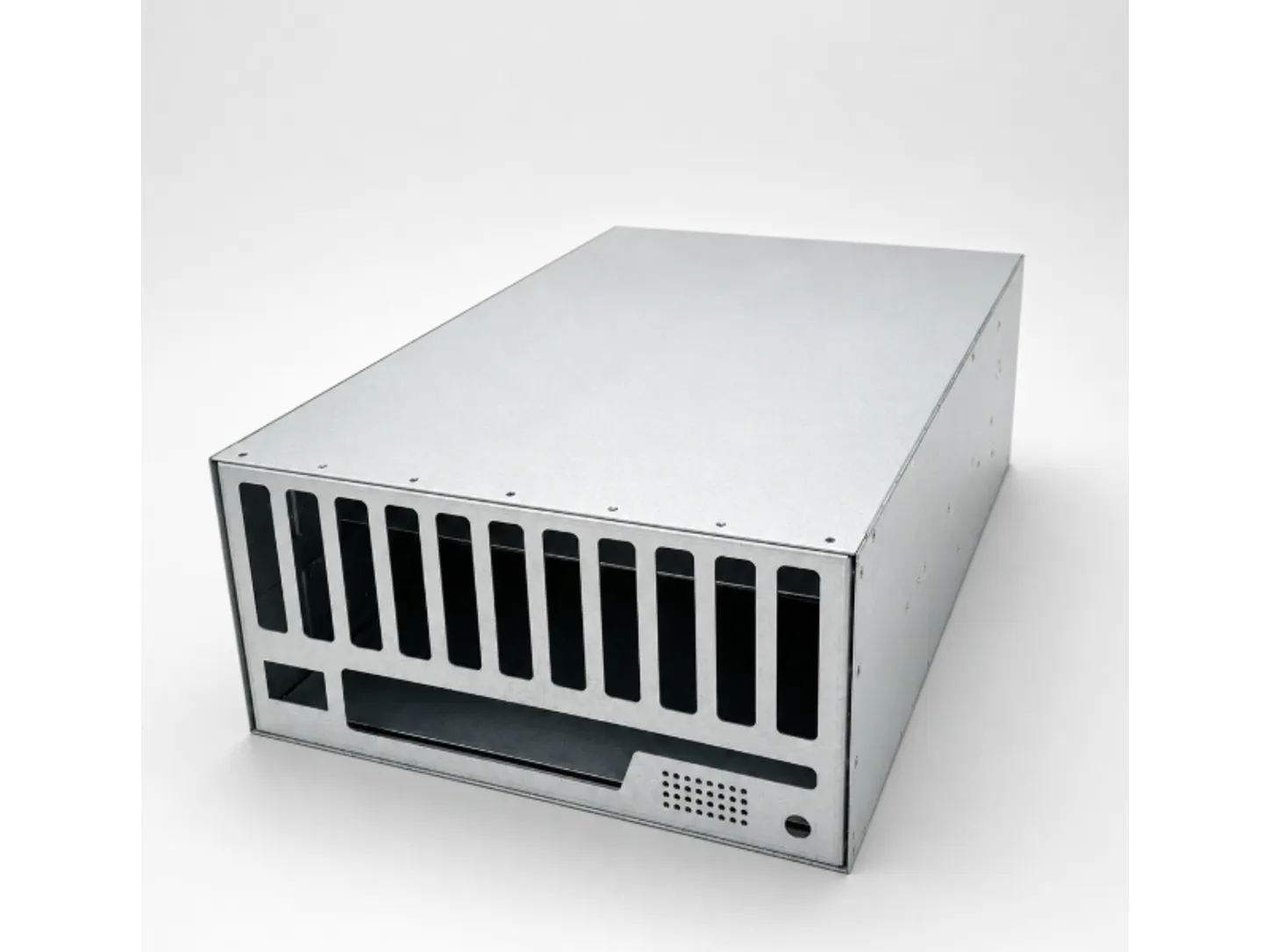
A representative route may combine hole-making, formed features, threads and installed hardware before assembly checks.
Representative production route. Actual steps, controls and external processes depend on the drawing and approved project plan.
Upload enclosure drawings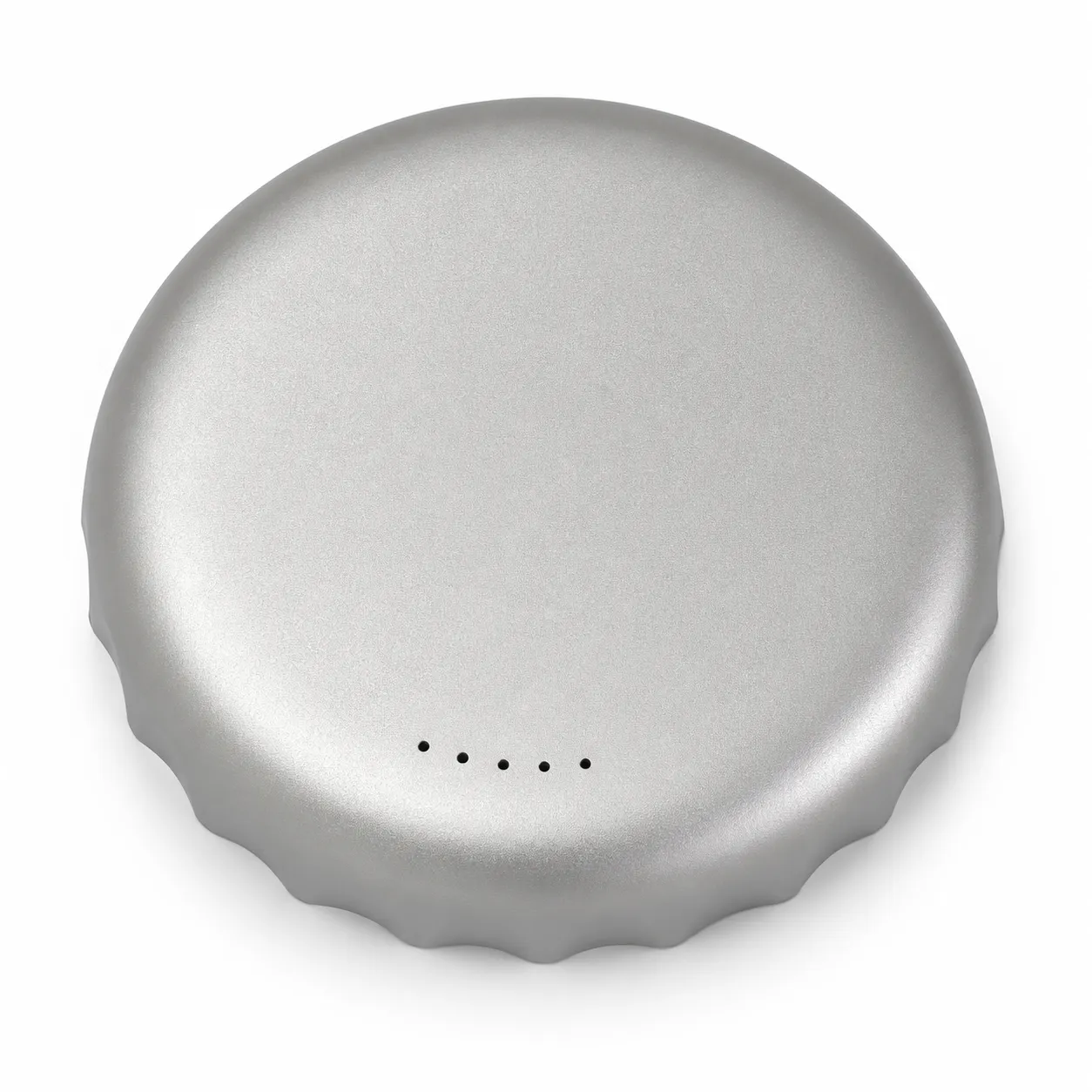
This circular shell has a softly curved outer face, a wavy perimeter and an open inner cavity. Exterior and interior views help connect the visible design with the parts that must fit inside it.
Appearance and assembly reference. Material, dimensions and manufacturing route are confirmed for each project.
View the product sample and detailsHave a question about your part? Leave a message and a reply email.
Yes. Upload 2D drawings and available STEP/STP files for a design-for-manufacturing review of size, mounting features, bend lines, ventilation, hardware, finish, tolerances and production quantity before quoting.
Common routes include powder coating, ink coating, plating, e-coating, anodizing, passivation, brushing, screen printing, pad printing and project-specific surface treatments. Finish thickness and cosmetic surfaces should be noted in the RFQ.
Yes. PEM inserts, rivets, screws, welding, simple assembly and packaging can be reviewed when the drawing or assembly notes show the requirement.
Send 2D/3D files, material, thickness, finish color or sample, annual quantity, critical dimensions, cosmetic requirements and any assembly or packaging notes.
Thank you. We will reply to the email address you provided. You do not need to submit again.
Question ID:
Include material, thickness, finish, annual quantity, critical fit areas, hardware, inspection and packaging needs so engineering can review a practical manufacturing route.