This guide concerns ordinary carbon and low-alloy steel. Stainless steel, aluminum and previously coated materials require a fresh check of the suitable treatment system.
1. Black oxide: color from a surface reaction
Common oxidative blackening of steel forms a black oxide film associated with magnetite, Fe₃O₄. The film is thin, usually retaining much of the underlying surface texture and causing relatively small dimensional change. This makes it a candidate when a black appearance must coexist with holes, shafts or threads that need to fit. [1]
Small dimensional effects do not remove the need to inspect critical features. Pretreatment, residues and the final oil or sealer can affect the actual fit. State whether precision dimensions are accepted before or after finishing.
Rust protection also depends on post-treatment. Birchwood Technologies links protective performance to a suitable rust-preventive oil. Oil continuity, subsequent cleaning, storage and packaging all change the conditions under which an oiled part is protected. [2]
“Blackening” can refer to traditional hot black oxide, mid-temperature oxidation or room-temperature blackening routes. A similar final color does not establish equivalent film chemistry, performance or applicable specifications. Specify the process and post-treatment, not just the color. [1]
2. Phosphating: distinguish iron, zinc and manganese systems
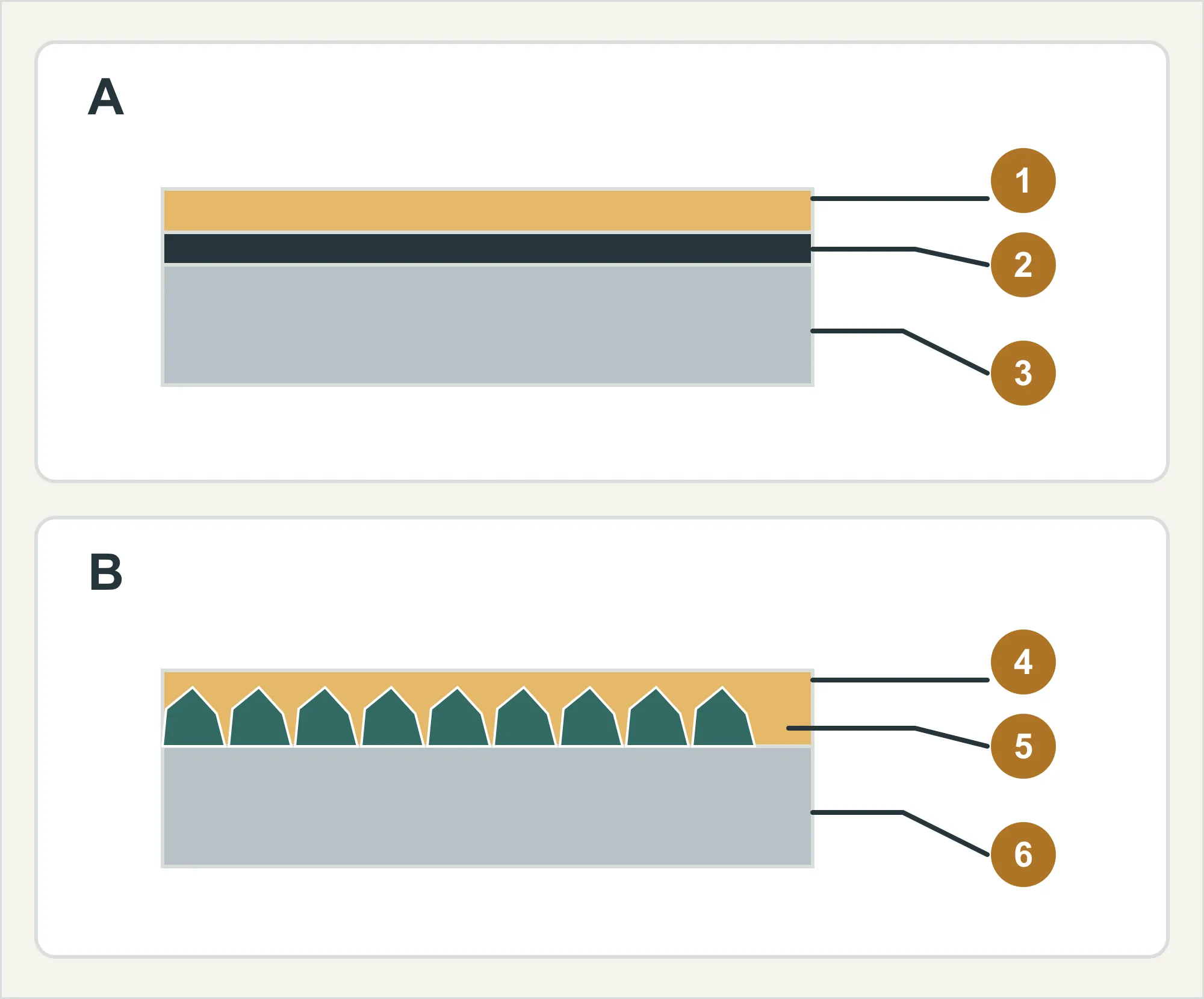
Phosphating forms an insoluble phosphate conversion film on a metal surface. It may prepare a surface for paint or work with oil and other lubricants. Film structure, coating weight and post-treatment depend on the intended use, so “phosphate finish” alone is incomplete. [3]
These are common directions, not the full range of uses. Narayanan's review separates paint applications from friction applications and identifies lubricant retention as part of the mechanism. This is not evidence of reliable long-term operation without lubrication. [3]
Zinc phosphating is different from zinc plating. One forms a phosphate conversion film; the other deposits metallic zinc. Their layers and protection mechanisms differ even though both names contain “zinc.”
| Phosphate type | Common uses | What to confirm |
|---|---|---|
| Iron phosphate | Paint pretreatment, often in coating systems with relatively moderate corrosion demands | Compatibility with the paint; adhesion and corrosion acceptance after painting |
| Zinc phosphate | Paint base, or a system with oil or lubricant for corrosion protection or forming assistance | Specific application, film requirements and post-treatment; different systems are not interchangeable |
| Manganese phosphate | Lubricated running-in of some mechanical contact surfaces, helping reduce scuffing and wear | Lubrication, contact condition, fit and function after running-in |
3. Compare both processes on the same basis
There is no universal winner for corrosion protection or price. The delivered product has undergone a sequence of treatments; comparing process names alone omits conditions that determine the result.
| Comparison | Oxidative blackening of steel | Phosphating |
|---|---|---|
| Film formed | Typically a black oxide film | Phosphate conversion film; identify iron, zinc or manganese type and formulation |
| Common purpose | Black appearance, small dimensional effects and rust protection with post-treatment | Paint pretreatment, or oil/lubricant-supported corrosion protection, forming or running-in |
| Corrosion assessment | Evaluate the oxide together with its oil or sealer | Evaluate phosphate together with sealing, oil or the subsequent coating |
| Effect on fits | Usually small; inspect critical fits in the specified finished condition | Depends on film type, coating weight, structure and post-treatment; not universally negligible |
| Later powder coating or painting | Do not assume an already oiled black oxide surface is a qualified paint base | Iron and zinc phosphate are common pretreatments, but must match the complete paint process |
| Friction and lubrication | Evaluate the actual surface and lubrication conditions | Some manganese and zinc systems work with lubricants; this does not guarantee dry-friction performance |
| Purchase requirements | Blackening route, applicable specification, sealer, appearance and finished-part acceptance | Phosphate type, applicable specification, film requirements, post-treatment and finished-part acceptance |
4. Compare corrosion protection with the environment and post-treatment specified
Comparing black oxide plus oil with phosphate plus oil is different from comparing black oxide plus oil with phosphate plus a complete paint system. The latter includes different protective layers and operations; their test results cannot all be attributed to the conversion film.
Phosphate films contain pores. Their presence alone does not establish long-term corrosion protection. Evaluate oil, sealer or paint against the intended environment. [3] Specify at least:
- Dry indoor use, condensation, outdoor rain, salts or cleaning fluids.
- Whether parts arrive oiled, are degreased before assembly and can have the oil film maintained in service.
- Any powder coating, paint or other topcoat and its acceptance requirements.
- Whether specimens are flat panels or actual parts, and how edges, holes, seams and liquid traps are assessed.
What a salt-spray requirement needs
Agree the method, duration, specimen condition and failure criteria. Red rust on steel, paint blistering and corrosion spread from a scribe are different acceptance observations.
ASTM B117's public description defines a salt-spray environment; it does not assign a universal test duration or interpretation to every product. Salt-spray results alone cannot be converted directly into years of natural exposure. A supplier's single hours figure is insufficient for comparing systems. [4]
5. Check dimensions and functional surfaces in their final condition

Confirm dimensions and function in the final delivery condition. A thin black oxide film does not mean every dimension is unaffected, and all phosphating processes cannot share one assumed thickness.
Coating weight is mass per unit area, for example g/m². It is different from geometric thickness. Variations in film structure, porosity and roughness prevent treating one coating weight as a universal dimensional addition. The review also notes that coating weight alone does not establish corrosion quality. [3]
Mark the relevant locations on the drawing:
These requirements should follow the part's function. Ordinary dimensions do not all need special acceptance procedures.
- Locating holes, pin fits and close sliding surfaces: define dimensions, surface condition and inspection stage; use actual assembly checks where needed.
- Threads and fasteners: define go/no-go gauging or assembly requirements; control delivery lubrication when joint performance matters.
- Grounding and electrical contacts: define whether treatment is permitted, whether masking is needed and how finished electrical function is accepted. Color or a thin film cannot prove conductivity.
- Surfaces to be painted or bonded: define residual-oil limits, cleanliness and pretreatment so later operations remain compatible.
6. Start with the part's use
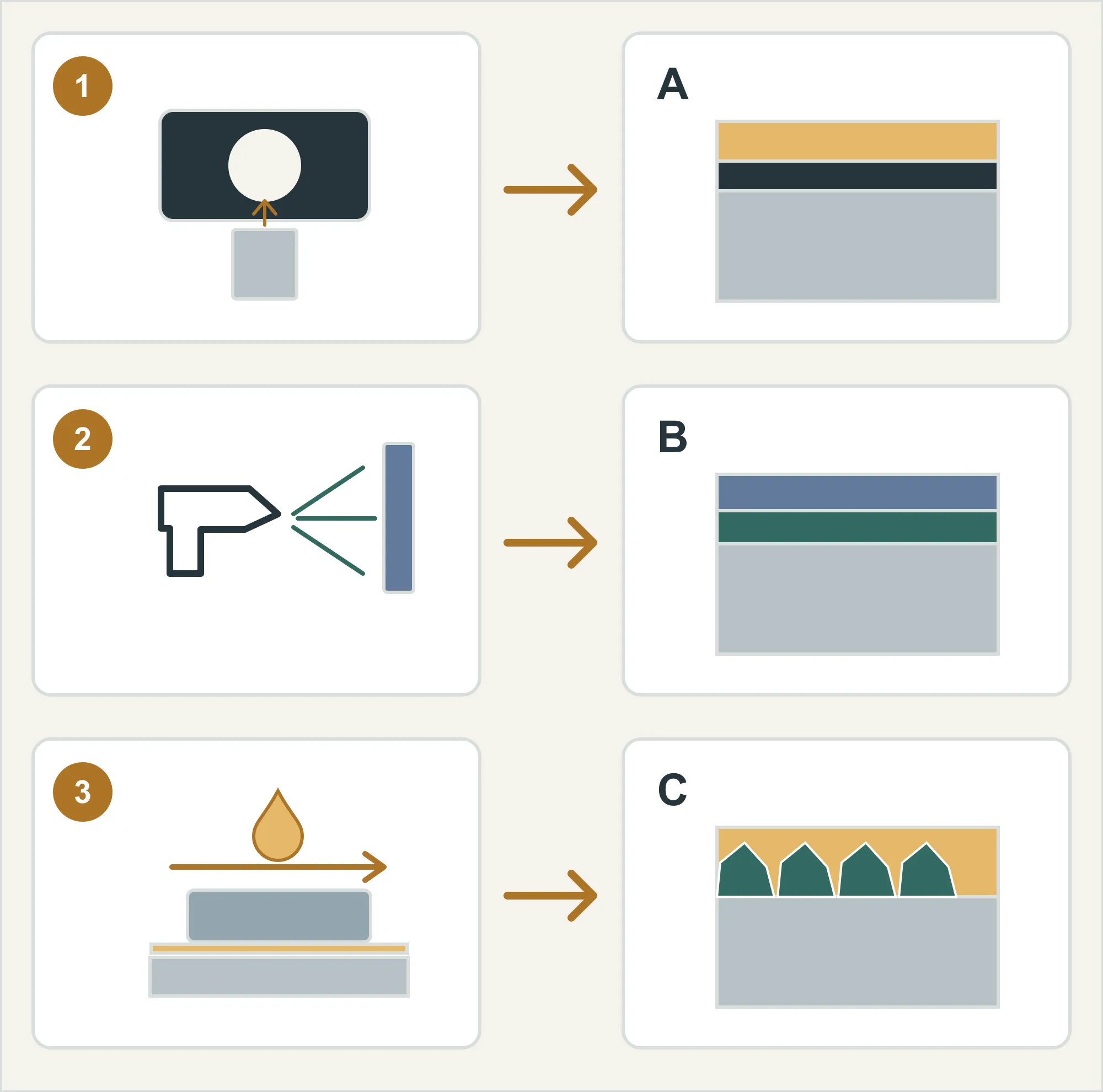
Black appearance with fit requirements
Consider oxidative blackening, then confirm the sealer, appearance sample and final fit. Tell the supplier about repeated cleaning, moisture or a prohibition on oil; a judgment made for indoor, oiled and properly packed parts does not cover those conditions.
Parts that will be powder coated or painted
Choose the complete paint system first, then compatible pretreatment. Iron or zinc phosphate may be candidates depending on substrate, paint, process line and corrosion requirements. Because paint covers the surface, the darkness of the phosphate film should not drive selection. [3]
Sliding contact or running-in
Consider manganese phosphate with lubricant, checking load, relative movement, contact condition and fit. Some zinc systems also have such applications, but assess the actual process. [3][5] Phosphating does not replace running-in or functional validation and does not automatically allow oil-free operation.
Prolonged moisture, outdoor or salt exposure
Define protection and maintenance needs, then compare complete finishing systems. Include other coatings suitable for the substrate where necessary instead of limiting the choice to bare black oxide or bare phosphate. See the powder coating, plating and anodizing comparison.
7. Make drawings and quote requests unambiguous
“Black oxide” or “phosphate” can start a discussion. Before ordering, agree the following:
| Requirement | Why it matters |
|---|---|
| Material grade, initial surface and relevant heat-treatment condition | Establish process suitability and pretreatment limits |
| Treatment type and specification with revision | Distinguish blackening routes or iron, zinc and manganese phosphate |
| Oil, sealer, lubrication or subsequent painting | Define the complete delivered surface condition |
| Appearance sample and permitted variation | Agree color, gloss, spots and rack-contact locations |
| Critical fits, grounding and masking areas | Protect assembly, electrical function and subsequent operations |
| Corrosion and functional acceptance | State methods, conditions and pass criteria, not only salt-spray hours |
| Packaging, storage and cleaning before assembly | Align delivery condition with actual use |
If the process is still undecided
An initial request could say: “Please assess finishing options against the drawing. Priorities are [black appearance / later painting / fit and running-in / rust protection]. The environment is [to be completed]; parts [will / will not] be cleaned before assembly. Critical fits and contacts are marked. Please state the treatment type, post-treatment and proposed sample acceptance checks in the quotation, listing unresolved items separately.”
This starts a discussion; it is not a universal drawing note replacing a product specification. Put agreed requirements into a controlled drawing or jointly approved technical document. The surface-finish RFQ guide explains broader preparation.
- [1] Birchwood Technologies — Black Oxide Temperature Guide; process routes, not universal product-performance limits.
- [2] Birchwood Technologies — Black Oxide Finishes; oil, dimensions and surface uses.
- [3] Narayanan (2005) — Surface Pretreatment by Phosphate Conversion Coatings: A Review; Table 5, sections 3.6.2–3.6.3 and 3.12, pp. 130–177. Basic mechanisms, not current chemical or environmental specifications.
- [4] ASTM B117-26 — public Scope and Significance and Use only; the paid full standard was not consulted.
- [5] Birchwood Technologies — MicroLok MZN Zinc Phosphate; a specific lubricated running-in example, not all zinc phosphate. Sources accessed September 20, 2026 (America/Los_Angeles).