Developing a weighing pan for a new electronic scale, or sourcing a stainless steel cover for an existing assembly? Send HARVLAND your drawing, sample photographs and support arrangement to discuss forming, finish and sample requirements. Alongside length and width, specify the downturned edge height, sheet thickness, corner radii and mating clearances so the cover sits securely and works with the scale's weighing assembly.
A stainless steel weighing pan cover is the metal surface that carries goods or containers at the top of a scale. A common rectangular design combines a flat top with four downturned sides. The cover generally works with a supporting pan or frame underneath, so both the usable top area and the underside support arrangement matter.
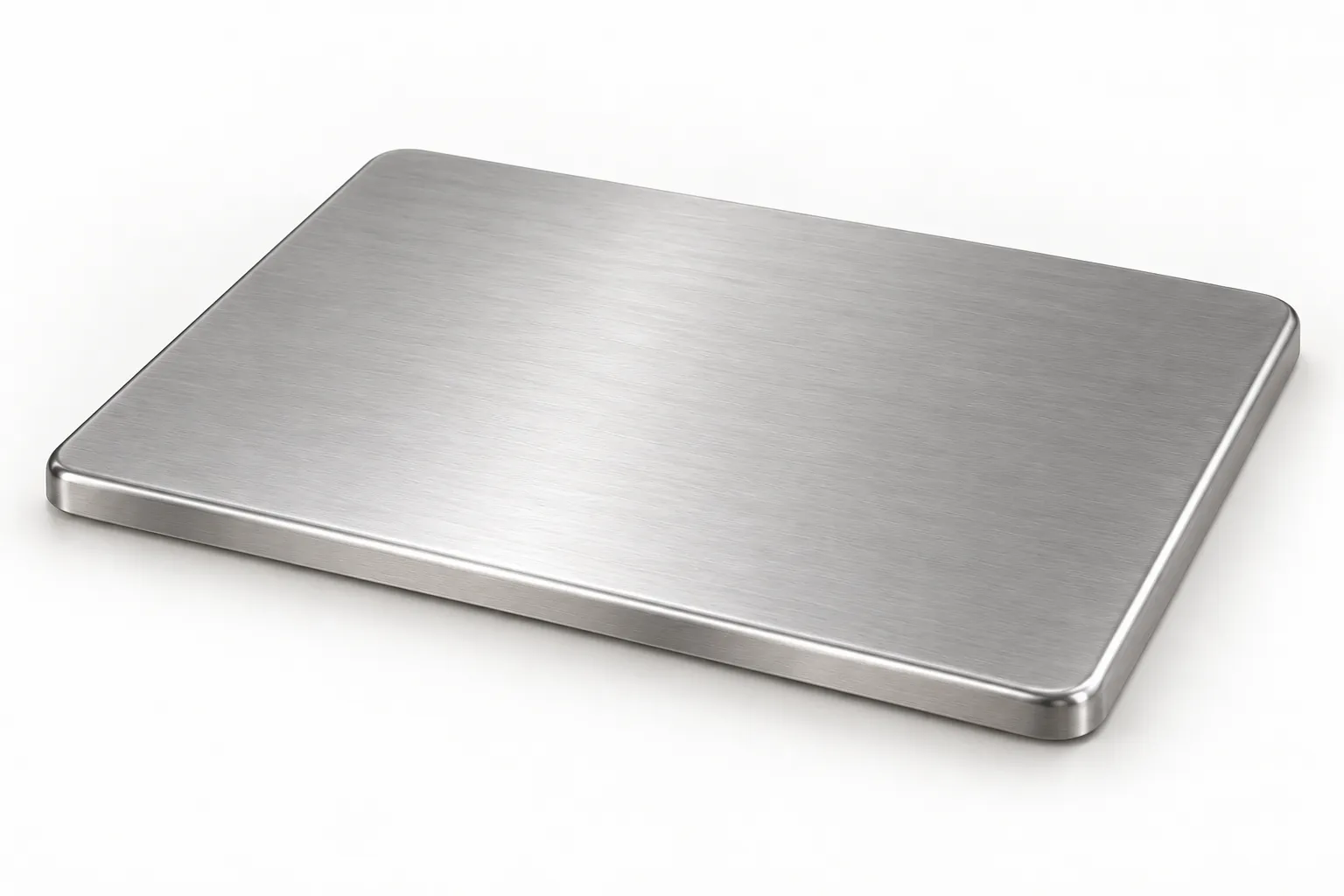
Concept rendering of a shallow stainless steel scale pan cover. Final dimensions, sheet thickness and mating features are defined by the project drawing.
Match the weighing pan to the application
Bench weighing scales, price computing scales and counting scales may all use stainless steel pans. How the load is placed and how the pan is cleaned help determine the right specification.
| Application | Main considerations | Useful enquiry information |
|---|---|---|
| Food portioning and bakery ingredients | Container footprint, cleaning method, corners and surface condition | Container base dimensions, direct food contact requirements, detergents and cleaning method |
| Retail weighing | Item size, routine handling, removal and appearance consistency | Scale photographs and views of the existing cover and sub-pan |
| Parts counting and packing | Concentrated loads, support span and handling impacts | Combined container and contents weight, contact area and support dimensions |
| OEM equipment and new scale models | Envelope, installation space, mating parts and sample approval | Sketch or CAD, expected quantities and the problem to resolve |
A broad container base and a small contact point can place different demands on local pan deformation, even at the same weight. Include how the load rests on the pan, as well as the intended scale capacity.
Stainless steel weighing pan sizes
Rectangular bench-scale pans come in several size families. These dimensions are examples used on existing products and can help establish an initial layout.
| Pan footprint | Product specification example |
|---|---|
| 230 × 190 mm | A&D SJ-HS series |
| 294 × 225 mm | KERN RIB series |
| 300 × 225 mm | OHAUS Valor 7000 series; also listed as 225 × 300 mm |
For an existing scale, provide its exact model and version, photographs of the original pan, and the mating geometry. Check the outer profile, internal clearance, corners and support locations. Matching nominal length and width does not establish a fit: the inside dimensions and corner radii may still differ.
For a new design, start with the footprint of the usual container or load and then arrange its support. Distinguish the overall outside dimensions from the usable flat area; curved transitions are not necessarily part of the stable seating area.
Specify edge height separately from sheet thickness
The downturned edge determines the visible side height and how far the cover overlaps the sub-pan. Sheet thickness is the thickness of the metal itself. To achieve a slimmer appearance, first evaluate reducing the edge height rather than automatically reducing the sheet thickness.
| Drawing feature | How to define it | Main effect |
|---|---|---|
| Outside length and width, L × W | Identify the measurement locations on the formed profile | Top footprint and scale appearance |
| Overall cover height, H | Measure from the top surface to the lowest edge; specify straight wall height separately if needed | Side profile, overlap and available space |
| Sheet thickness, t | State the material thickness and its requirement separately | Part mass, forming and resistance to deformation |
| Plan corner and bend radii | Distinguish the corners viewed from above from the cross-section bend | Fit around the sub-pan, appearance and process selection |
| Internal clearance | Identify inside dimensions close to mating components | Installation, looseness and interference |
For a shallow-edge design, show the sub-pan height that must be concealed, any permitted exposed area and how the cover will be removed. A shorter edge still needs sufficient location. A deeper edge needs checking against the fixed housing beneath it.
The inside corners of the cover must also accommodate the outside corners of the sub-pan. Clearance along the straight sides does not establish clearance at all four corners. Check the sample with the actual mating parts.
Choose material and finish around use and cleaning
SUS304 is one stainless steel grade used for pans on existing electronic scales. Material selection should also consider what the pan contacts, the environment and cleaning method. Where a grade is specified, state the material standard and required documentation on the drawing.
A brushed finish provides a directional metallic appearance. Define grain direction, visible surfaces, acceptable scratches and corner appearance, then confirm them with a sample. The flat top and formed corners can show different grain patterns; “brushed stainless steel” alone leaves room for different expectations.
For direct food contact, include the contact conditions and the compliance requirements of the destination market in the enquiry. Confirm material, surface processing, cleanliness and documentation together. Whether the complete scale can be washed down depends on its design and operating instructions.
Review forming, corners and edge treatment together
A rounded rectangular scale pan cover can be evaluated for stamping and forming. The choice of an overall forming approach, operation sequence and trimming method depends on the material, thickness, edge depth and radii. Continuous corners shown in a concept rendering need to be established through process review and samples.
If cutting and bending routes are being considered, decide whether corner seams are acceptable and define the appearance and cleaning requirements after seam treatment. Compare routes using the same drawing, quality requirements and expected quantities, with tooling, sampling and production prices identified separately.
The lower edge also needs attention. Explain whether operators will lift the pan by that edge, touch the inside while cleaning, or handle it near plastic mating parts. This helps the supplier assess trimming, deburring or other edge treatments while maintaining the required fit.
See custom metal stamping for process enquiries and the sheet metal deburring guide for specifying edges.
Check samples both separately and on the scale
Dimensional inspection and assembly checks serve different purposes. A cover that looks flat still needs to be checked for support, location and clearance on the actual sub-pan or frame.
Agree the following checks in the sample requirements:
- Dimensions and appearance: outside dimensions, overall height, thickness, radii, edges and brushed finish.
- Fit and removal: rocking, corner interference and ease of removing and replacing the cover.
- Unloaded and loaded clearance: inspect gaps between the moving weighing assembly and the fixed housing under the scale's test procedure, including possible contact after deformation.
- Scale performance: the equipment team checks return to zero, repeatability and different load positions using its established procedure; after replacing a pan, inspect or adjust the instrument as its instructions require.
Contact between a weighing component and the fixed housing can introduce an additional load path or friction that affects the reading. Assess a lower edge profile together with the installation space, rather than appearance alone.
Start a custom scale pan cover enquiry
A sketch or a few photographs can start the discussion. Include:
- Approximate pan length and width, and the shallow-edge or other profile you want.
- The sub-pan, support frame and installation location, with top, underside and side views where available.
- The application, total container and contents weight, and routine cleaning method.
- Any specified material and finish, initial order quantity and expected repeat quantities.
Mark undecided thickness, height or radii as open items. Send the information to HARVLAND to discuss fit, manufacturing and sample requirements and prepare a corresponding quotation.
Send your stainless steel scale pan cover requirements