Yes. HARVLAND supports coordinated production of sheet metal, deep-drawn and plastic parts, with plastic parts manufactured in-house. Both soft and rigid plastic requirements can be submitted for review. Materials, processes, inspection and delivery condition are confirmed for the drawing and assembly requirements.
In-house plastic production
Begin with the assembly task
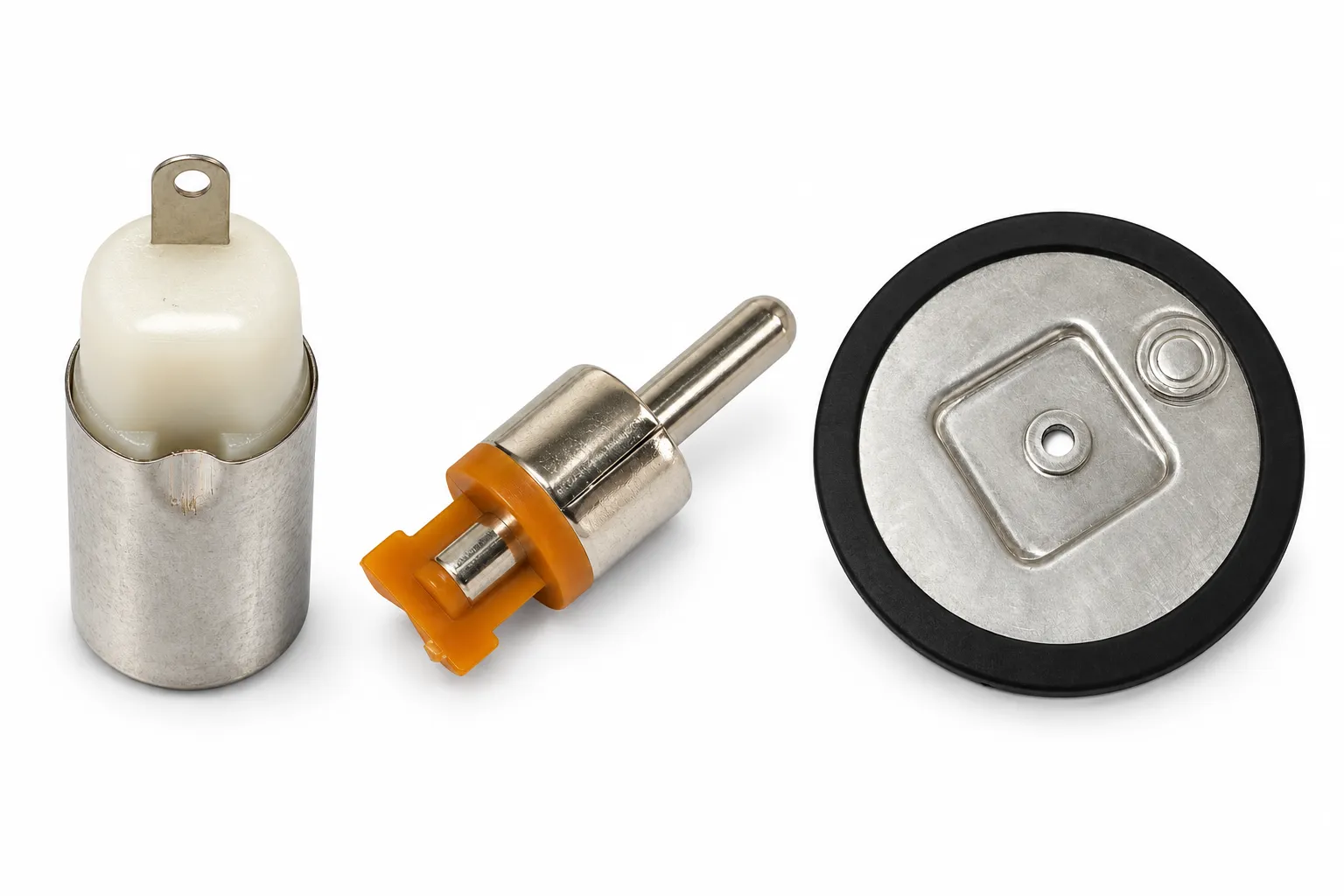
A product may combine a fabricated enclosure, drawn housing, metal connection parts and plastic locators. Discussing them on one assembly view makes the connections, clearance areas and contact surfaces easier to define.
HARVLAND manufactures plastic parts in-house and can supply them alongside sheet metal and deep-drawn parts. For soft or rigid plastic requirements, describe the locating, contact or edge-coverage task first, then discuss materials and geometry for the operating conditions.
Three samples illustrate three interfaces
A cylindrical shell with a white insert shows the relationship between housing, insert and pierced tab. A metal pin with amber plastic shows a pin, shell and locating structure. A metal disc with a black rim shows central mounting, local formed features and perimeter contact.
These are separate samples, rather than parts of one assembly. They help describe different metal–plastic interfaces. Discuss the intended industry and function against the customer’s assembly requirements. The photographs do not establish each metal component’s forming process.
Coordinate the interfaces, as well as the parts
Individual dimensional acceptance should be followed by checks of the combined condition. A housing may need a defined insert depth; a pin may need controlled projection from a shell reference face; a rim must fit both the disc edge and its mating surface.
Provide the assembly drawing, component drawings and mating parts so the review uses shared datums. Define the action, load direction and environment for locating, anti-rotation, edge protection or contact needs. Choose retention and production operations after reviewing those requirements.
Agree sample scope and delivery condition
You may need matched loose metal and plastic parts, or wish to discuss an assembled delivery. Confirm the included parts and operations, the purpose of the sample and any functions that need validation in the real assembly.
Begin an enquiry with photos, sketches or drawings, intended use, mating relationships and expected quantities. Mark undecided materials, tolerances and finishes for discussion. Once samples are approved, record the agreed assembly dimensions, appearance and inspection requirements in the controlled version used for production and delivery.