This type of component can be customized around the fit between a metal housing, plastic locating part and metal tab. HARVLAND manufactures plastic parts in-house and can supply them together with metal parts. Materials, retention and functional requirements are confirmed against the assembly drawing.
Read the visible structure
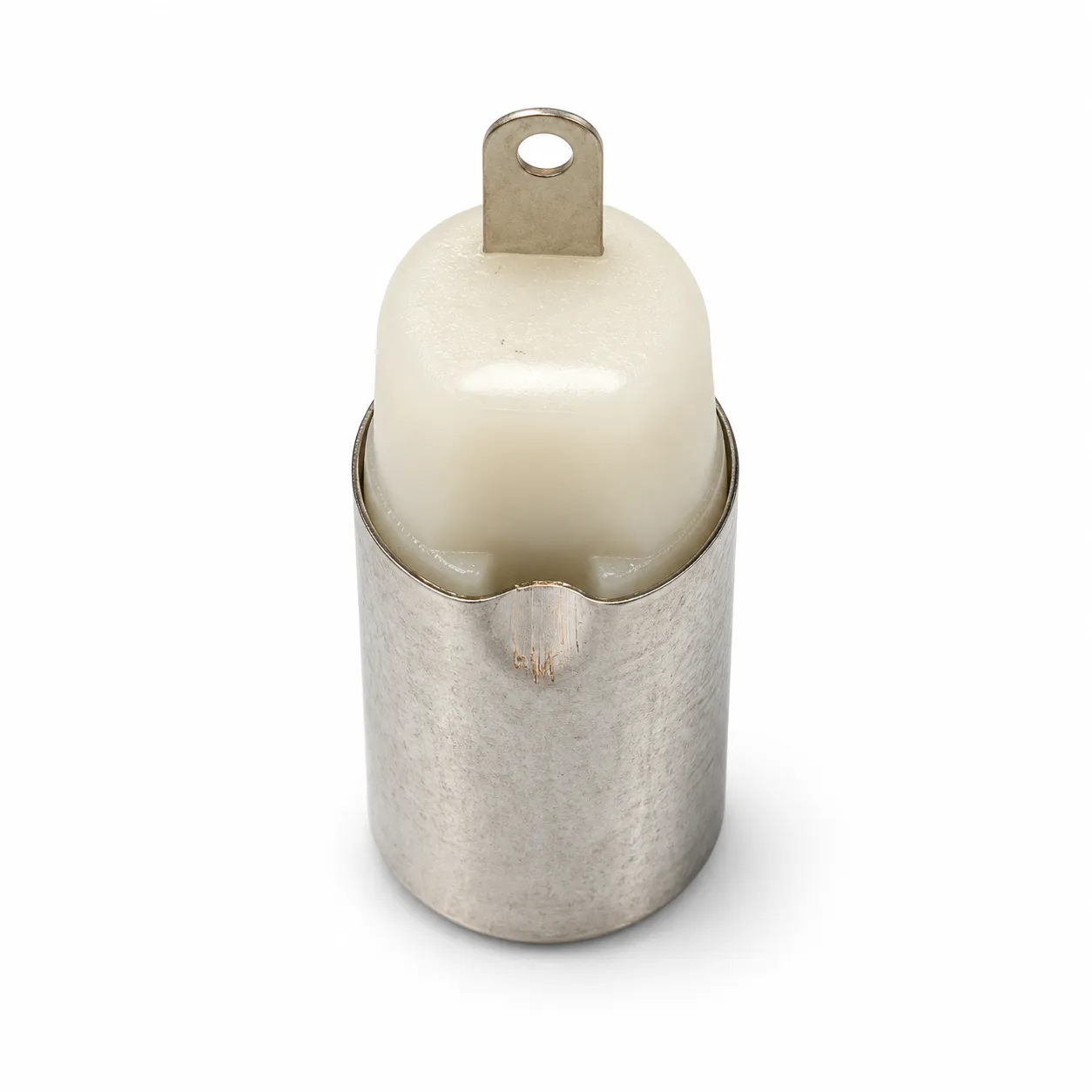
The sample has a silver cylindrical shell, a white plastic insert extending above its opening, and a flat metal tab with a round hole. A local notch is visible at the shell opening. These features provide a useful starting point for discussing connection access, surrounding space and assembly orientation.
If the tab is intended for an electrical connection, describe how the wire or terminal will attach. If it locates or secures another component, provide that mating component. Define the interface function before selecting the features that need dimensional control.
Define the interfaces before isolated dimensions
Use assembly datums to define the insert position, its projection above the shell, the tab orientation and any clearance around the notch. Each relationship can affect access during the next assembly step.
Mark the shell opening datum, insert position, tab-hole center and clearance areas on the drawing. Where rotation or withdrawal must be prevented, specify the load direction, service needs and acceptance method before reviewing retention options.
Connect material selection to use
Plastic color and shape do not establish electrical insulation or temperature ratings. Electrical isolation projects need operating conditions, spacing requirements, material requirements and a validation method. Locating applications may instead prioritize dimensional stability, assembly force and contact positions.
Select the metal and finish for the intended use. Identify cosmetic surfaces, rubbing interfaces, connection areas and packaging protection before sampling.
Review the metal and plastic parts in one project
HARVLAND can review in-house plastic parts together with the metal housing requirements. Send an assembly drawing and component drawings, or begin with photos and a sketch marking connection, location and clearance needs.
Include expected quantities, known or undecided materials, appearance requirements, and whether you need matched loose parts or an assembled delivery. Assembly operations and delivery condition are agreed for the project. Sample approval should include fit with the real mating parts as well as individual dimensions.