Review the pin, shell and plastic locator as a set of mating interfaces. The sample illustrates this arrangement; connector type, mechanical requirements and electrical performance are defined by the mating design and validation requirements.
A pin with metal and plastic supporting parts
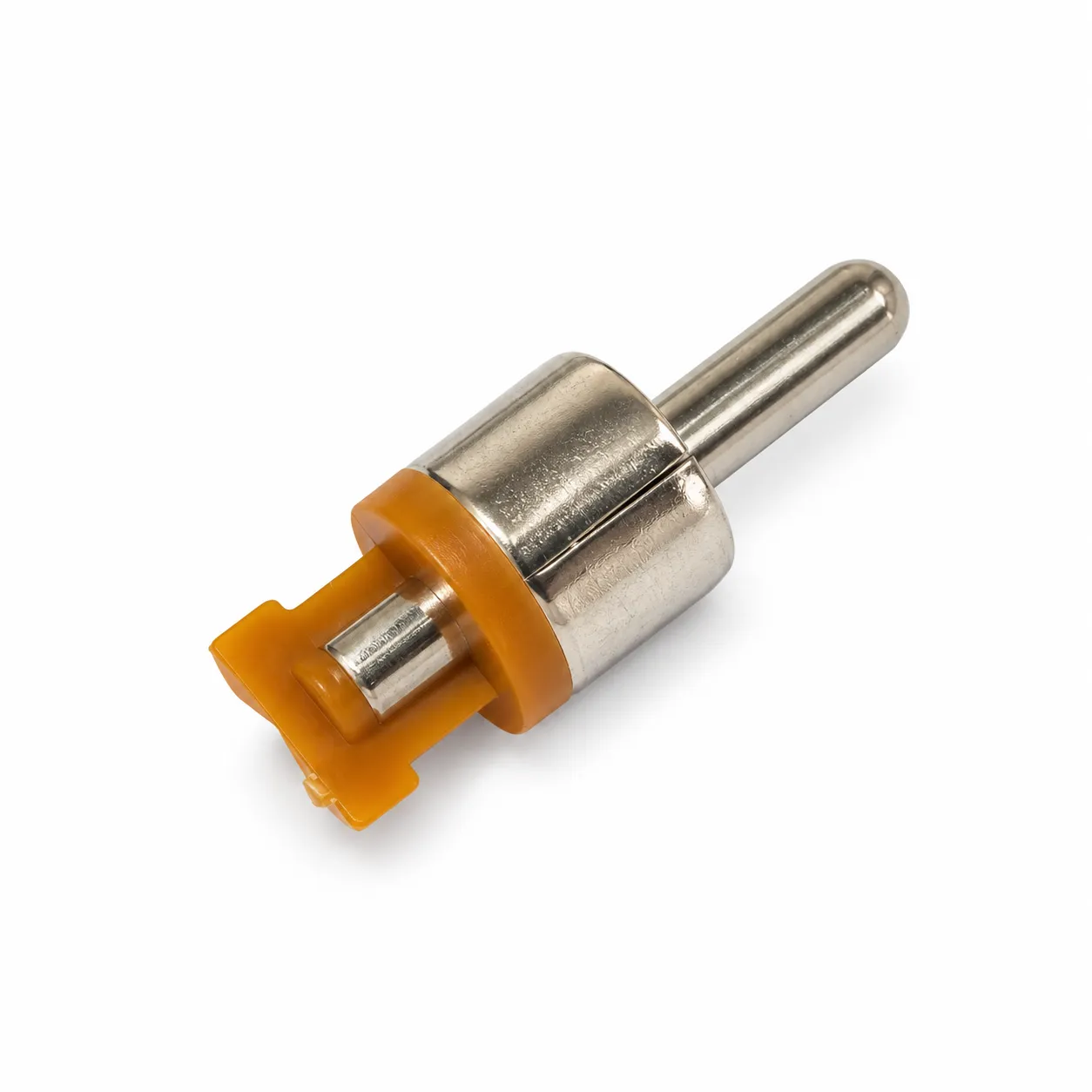
The visible sample includes a projecting round-ended metal pin, an outer shell with a longitudinal opening, an amber plastic collar and an open rear structure. It is a useful example of coordinated metal-pin and plastic-locator production.
For audio, video or other signal-connection projects, this central-pin and outer-metal arrangement can help explain a proposed layout. Confirm the actual interface, mating dimensions and compatibility against the project drawing before sourcing.
Start with the mating component
Review pin diameter, projection and position relative to the shell together with the intended socket or mating part. A pin-length dimension without a reference face can lead to different interpretations of usable projection.
Define the mating reference face and pin position, and provide the mating drawing or sample. If insertion feel, retention or contact stability matters, specify the operating conditions and acceptance method.
Include the locator and rear access
Design the plastic locating surfaces together with the metal pin and shell. The open rear area may need to accommodate a connection operation, so show access, surrounding parts and the assembly sequence.
Specify resin, metal and surface finish for the project. If soldering, crimping or another connection step is involved, define its conditions before reviewing material and geometry. The photograph does not identify the plating or resin grade.
Approve the component as a coordinated sample
HARVLAND manufactures plastic parts in-house and can review them alongside metal pins and shells. First distinguish matched loose parts from an assembled delivery, then agree the required operations and checks.
Provide the mating component, pin position, rear connection method, quantity and packaging needs. Check samples with the real mating part and confirm access for the intended connection. Electrical applications also require the agreed functional verification.