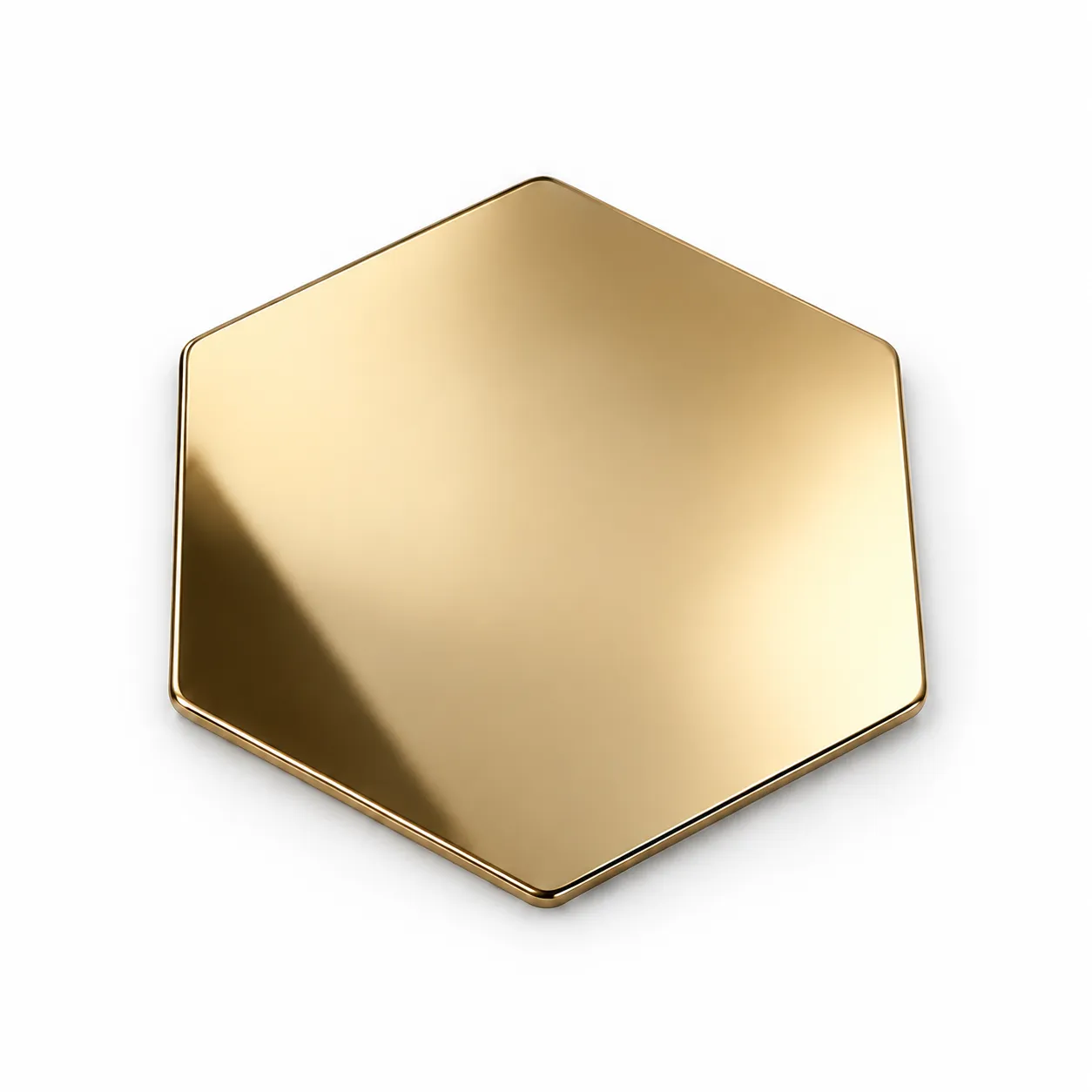
A beer glass, a wine glass and a whiskey tumbler may need similar coaster dimensions, while two glasses used for the same drink may have different bases. Start by measuring the glasses you actually serve with. The design illustrations show appearance options; they do not establish a tested specification.
Measure the usable area
For a circular glass base centered on a circular coaster, the nominal margin on each side is (coaster diameter − base diameter) ÷ 2. A 100 mm coaster and an 80 mm base give 10 mm per side. This is a geometry example, not a recommended size. For a hexagon, check across the flats; for an oval, check the shorter width and any edge details.
Compare the actual glasses
Wine and cocktail glasses often have a foot wider than the stem. Whiskey and whisky describe the same selection task here: inspect the tumbler base, whether served neat or with ice. A tall beer glass also needs a flat, stable supporting surface; making a coaster larger does not correct a rocking glass.
Plan for cold-drink condensation
Water vapor can condense when air next to a cold surface reaches its dew point. A solid metal coaster does not absorb that water, and a flat design may allow it to reach the edge. Check the intended glass, service time and humidity, then inspect both the coaster and table. Wipe collected moisture rather than assuming a metal surface will keep the table dry.
Match the finish to the cleaning routine
A mirror-like finish and a brushed finish show handling marks differently. Specify the desired appearance and test the proposed cleaner on a finish-approved sample. Examine color, gloss, logo contrast and any backing after repeated wiping. Dishwasher suitability requires confirmation for the complete assembly, including adhesive; it cannot be inferred from the metal alone.
Place the logo where it can be seen
View the artwork on an empty coaster and with the largest intended glass in place. Check edge clearance and the visual direction of any brushing. For a set or promotional pack, agree the artwork revision and a physical appearance reference so purchasing and production compare the same result.
Prepare a short sample brief
Give the supplier enough information to compare like-for-like constructions. If an item is undecided, name the use requirement instead of inventing a technical specification.
- List glass-base dimensions, the tabletop and typical wet-use conditions.
- Send the shape reference, logo file, expected quantities and packaging needs.
- Agree how the sample will be checked for fit, edge condition, appearance and cleaning.
| Glass type | Base measurement | Service check |
|---|---|---|
| Beer glass | Actual contact circle or foot | Cold condensation and stability on the table |
| Wine glass | Foot diameter, not stem width | Whole foot supported; logo visibility |
| Whiskey / whisky tumbler | Flat base or supporting ring | Ice, moisture and frequent lifting |
| Cocktail glass | Foot or contact area of the chosen glass | Different glass shapes; spills and wiping |